![youtube - [Video]](/web/image/product.image/944/image_128/youtube%20-%20%5BVideo%5D?unique=55c72cd)
Die Cutter Machine for Custom Applications
A die cutter machine gives print shops another way to approach custom work. Instead of being limited to standard shapes or creating a physical die for every new design, digital cutting allows the cutting pattern to change from one job to the next.
This flexibility can be especially useful for short runs, customized applications, and jobs where designs change frequently. It gives shops more room to respond to customer requests without adding die-making or outsourced finishing to the workflow.
For print businesses, the value isn't just in what the machine can cut. It's in what it allows you to say yes to.
Professional Die Cutting Equipment: What Can It Do?
Traditional die cutting has long been a practical solution for producing consistent shapes at scale. But what happens when the shape changes every few jobs? Creating a new physical die for every design isn't always practical, especially for short runs or customized work.
That's where digital die cutting offers a different approach.
Digital systems allow operators to change the cutting pattern according to the digital file without producing a new physical die for each job.
So, what is a die cutter machine useful for in a print shop? Depending on the equipment and materials, digital cutting can be used for:
Cutting custom outlines around printed graphics
Creating prototypes and samples
Producing short-run packaging
Cutting labels, cards, and signage
Working with specialty materials such as magnetic stock
For shops considering a digital die cutter, it's worth looking beyond the machine itself. The materials you work with, the size of your typical jobs, and the applications you want to produce all play a role in finding the right solution.
Commercial Die Cutting Machine
Not every print job needs a digital cutter. But when customization becomes part of your business, having one available can open up new possibilities.
Think about the jobs that don't quite fit your usual production process. Those are often the jobs that get outsourced or turned away entirely. A digital cutter gives you another option for bringing that work in-house.
Instead of building production around a fixed collection of physical dies, digital cutting gives operators the flexibility to move between different designs.
And that can matter when you're trying to:
Take on more short-run and customized work
Reduce the need to outsource certain finishing steps
Experiment with new applications
Respond to customer requests more easily
Make better use of the equipment already on your production floor
At Skandacor, we provide print businesses with practical finishing solutions that help them expand what they can produce in-house. Our range of digital die cutters gives shops the flexibility to choose the right fit for their workflow, production needs, and the applications they want to take on.
Our FINISHpro lineup includes the 1523 AF and 2029 AF for standard print and packaging applications, along with larger AF Max models like the 2739 AF Max and 3547 AF Max for larger-format or thicker-material applications. If you’re considering your options, learn more about what sets the FINISHpro AF and AF Max apart.
Production needs can look different from one market to another. Having a range of digital die cutters gives print shops the flexibility to choose a solution that fits their workflow and the work they want to produce.
FINISHpro 2739 AF Max: Built for Flexible Production
So, what can that flexibility look like on the production floor?
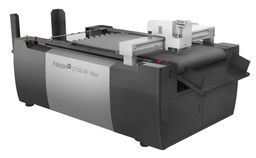
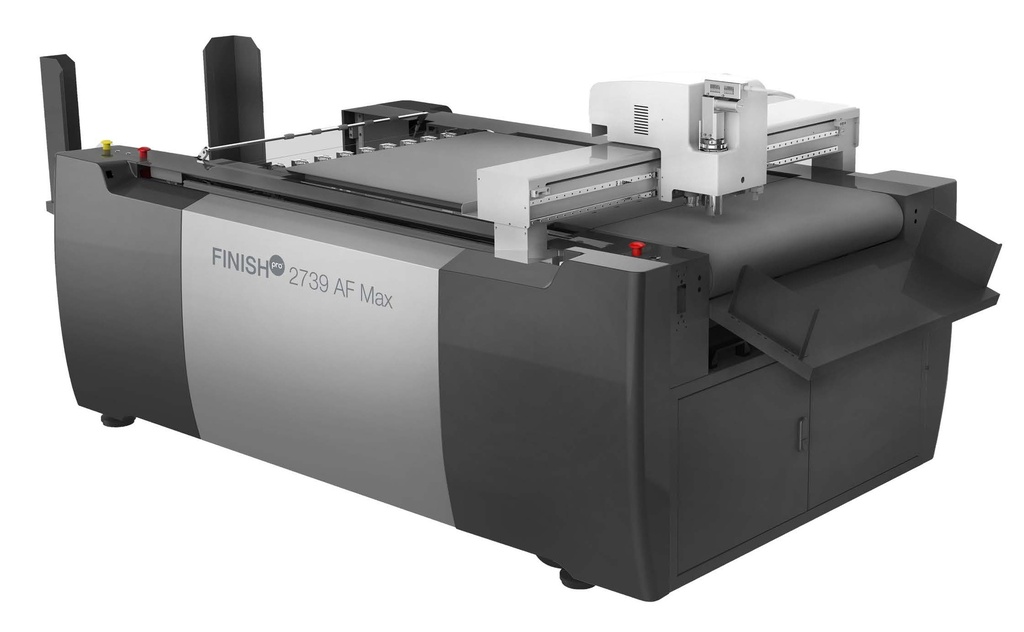
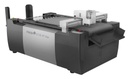
For shops looking to expand their digital cutting capabilities, our FINISHpro 2739 AF Max Digital Die Cutter is designed for a range of applications across signage, printing, and packaging, including sample making and short-run customized production. It is designed to cut materials including cardboard, sticker stock, magnetic sticker stock, foam board, and corrugated plastic. See what else is possible with FINISHpro by exploring the materials its digital die cutters can handle.
With a 39 x 28-inch cutting area, the 2739 AF Max is built to keep production moving while handling a variety of jobs. Its optical camera reads registration marks to help keep cuts aligned with the printed design, with a cutting accuracy within 0.1 mm.
But the biggest advantage here isn’t the numbers on the spec sheet. It's the ability to move from one application to another without creating a new physical die every time.
A custom sign today. Packaging samples tomorrow. Magnetic graphics the next day.
The machine adapts to the job, and that gives the print shop more room to adapt with it.
Final Thought
The goal isn’t to put another machine on your production floor. It’s to give your shop another way to handle the custom jobs customers are already asking for.
That could mean bringing more finishing in-house, taking on applications you previously outsourced, or creating new products for existing customers.
At Skandacor, we help print shops find finishing equipment that fits the work they're producing now while giving them room to take on what's next.
Alternative Products
![[3H173547M] FINISHpro 3547 AF Max Digital Diecutter System](/web/image/product.template/27601/image_512/%5B3H173547M%5D%20FINISHpro%203547%20AF%20Max%20Digital%20Diecutter%20System?unique=110263d)