At Skandacor, we offer both the FINISHpro AF series and the FINISHpro AF Max series, and the biggest difference comes down to the materials you need to cut.
Both series are precise, die-free flatbed cutting systems designed for the print, packaging, and signage industries. Both offer the same overall workflow experience, the same integrated touch screen PC, and the same cutting accuracy of up to 0.1 mm using a registration camera mounted on the cutting head.
The real separator, though, is tooling and material capability.
What sets the FINISHpro AF and AF Max apart?
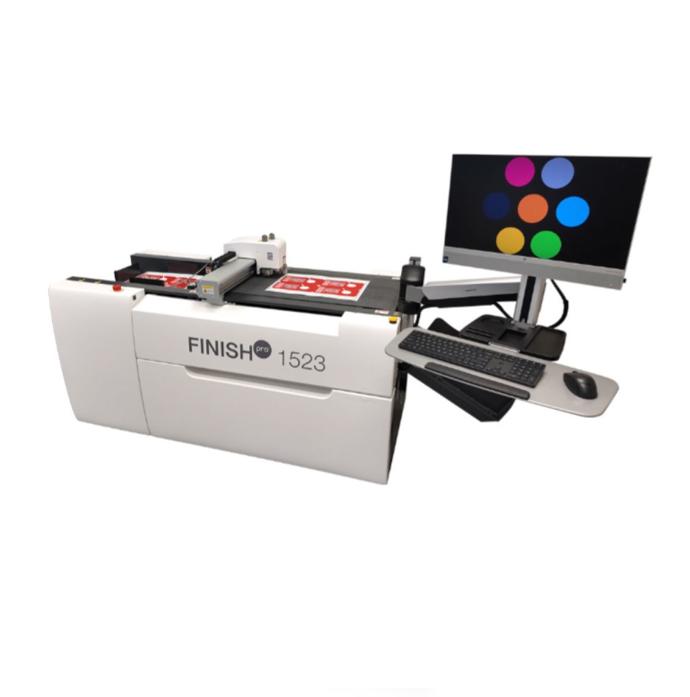
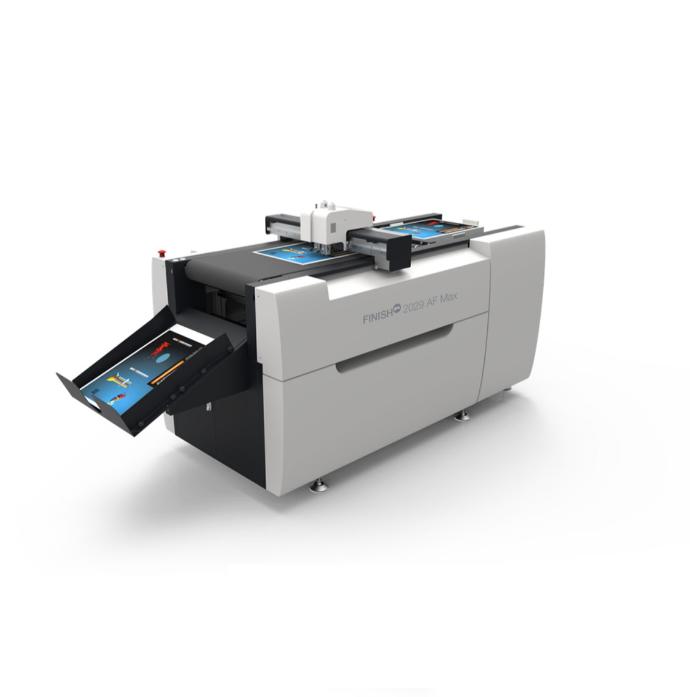
The FINISHpro AF series is designed for standard print and packaging materials such as paper, sticker stock, labels, and card stock. It handles substrates up to 1.4 mm thick.
The FINISHpro AF Max series is built for shops that need more flexibility. Thanks to an oscillating tool, it can process substrates up to 6 mm thick, including materials like foam board, thicker card stocks, and corrugated plastic.
Choose the FINISHpro AF for everyday print and packaging work
The AF series makes sense for shops focused on standard printed applications.
If your work mostly involves:
- Business cards
- Invitations
- Labels
- Tags
- Adhesive sheets
- Small packaging
- Sample making on standard substrates
then the AF series is likely the better fit.
It's built to handle the kinds of materials many print and packaging shops already work with every day, without adding capability you may not need.
The available AF models include:
- FINISHpro 1523 AF
- FINISHpro 2029 AF
The model name corresponds with the maximum sheet size it can handle, allowing shops to select the format that best suits their production needs.
Choose the FINISHpro AF Max for thicker materials and more flexibility
The AF Max series is the better choice when your shop needs to cut thicker or more varied materials.
If you are working with, or planning to work with:
- Foam board
- Corrugated plastic
- Thicker specialty boards
- More rigid substrates
- Signage applications
- Specialty packaging
then the AF Max is the better fit.
This is where the oscillating tool matters most. If your shop wants the flexibility to move beyond standard print substrates, that added tooling opens the door to a broader range of applications.
The AF Max lineup includes:
- FINISHpro 1523 AF Max
- FINISHpro 2029 AF Max
- FINISHpro 2739 AF Max
- FINISHpro 3547 AF Max
- FINISHpro 4735 AF Max
That gives shops more options not only in capability, but also in format.
How to decide which system is right for your
shop?
If your shop is primarily focused on paper, labels, card stock, and standard
packaging materials, the FINISHpro AF series likely gives you exactly what you need.
If your shop needs to cut thicker substrates or wants the ability to take on signage
and more specialized applications, the FINISHpro AF Max series is the better fit.
That is really the heart of the decision.
It is not about one machine being universally better than the other.
It is about choosing the system that matches the kinds of jobs your shop
wants to produce.
The bottom line
When you strip everything else away, the comparison between FINISHpro AF vs. AF Max comes down to one main difference: standard materials versus thicker, more versatile substrates.
If your workflow stays in the world of traditional print applications, one of the AF series machines is a strong solution. If you need the added flexibility of an oscillating tool and the ability to handle materials up to 6 mm, one of the AF Maxes may be the better match.
At Skandacor, we offer both, and we’re always happy to help you figure out which direction makes the most sense for your shop.