In commercial printing and packaging production, die cutting is a core finishing process that enables precise shaping, creasing, perforating, and stripping of printed materials at scale. From folding cartons and rigid packaging to labels, sleeves, and specialty print applications, die cutting bridges print output and finished products ready for downstream operations.
This article explains how a die cutter machine is used in professional production environments, outlines the main machine types, and clarifies where each technology fits within modern print and packaging workflows. The focus is strictly commercial—industrial throughput, material compatibility, and production efficiency—rather than small-format or consumer use.
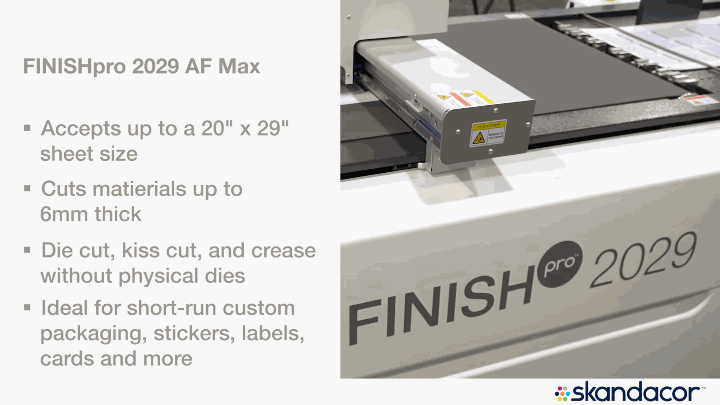
What Is a Die Cutter and How It Works
At its core, die cutting is a mechanical process where a shaped tool (die) cuts, creases, or scores material under controlled pressure. For SEO clarity, what is a die cutter and what is die cutting can be summarized as follows:
- A die cutter is a production machine that applies force to a cutting form to convert flat printed sheets or webs into finished shapes.
- Die cutting combines cutting, creasing, embossing, and stripping in a single finishing stage.
In commercial environments, die cutting equipment is engineered for:
- Consistent tolerances across long production runs
- Compatibility with paperboard, corrugated, synthetics, and laminated stocks
- Integration into automated print finishing lines
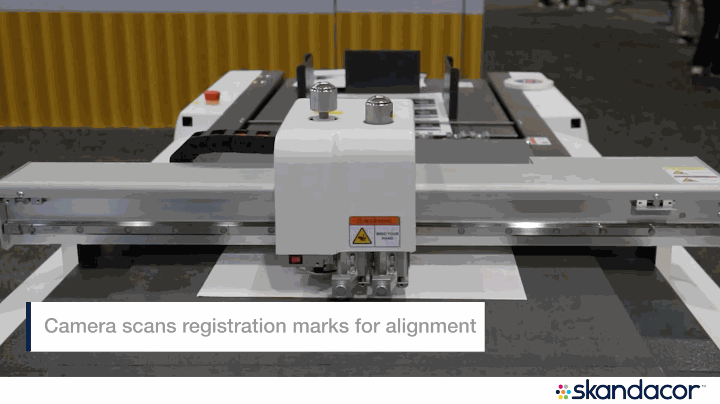
The cutting form itself may be steel rule, solid engraved tooling, or magnetic cylinders, depending on the machine type and production method.
Types of Die Cutting Machines
Commercial die cutting machines fall into three main categories, each optimized for specific production requirements, substrates, and volumes.
Flatbed Die Cutting Machines
Flatbed systems operate by pressing a flat cutting die against a stationary sheet. The process is cyclical rather than continuous, making flatbeds especially suitable for thicker materials and complex cutting profiles.
Common characteristics:
- High cutting pressure for dense substrates
- Excellent accuracy for creasing and multi-level tooling
- Flexibility across short to medium production runs
Typical applications include:
- Folding cartons
- Rigid packaging components
- Specialty print products requiring precise creasing
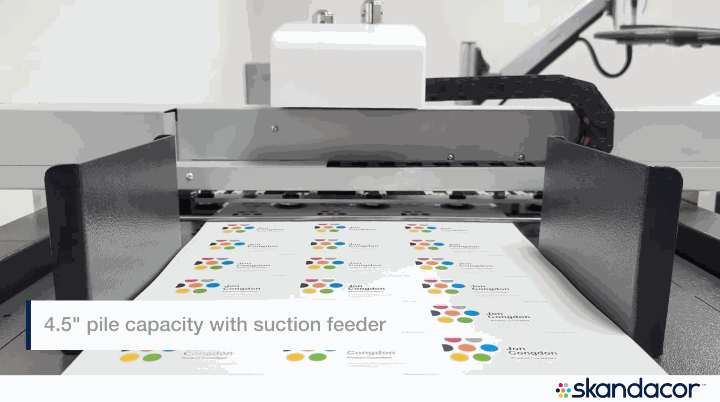
Flatbed die cut machines remain a standard choice in packaging plants where versatility and material range are priorities.
Rotary Die Cutting Machines
Rotary systems use cylindrical tooling to cut materials in a continuous motion. Sheets or webs move through rotating cylinders where cutting, creasing, and stripping occur at production speed.
Common characteristics:
- Continuous operation for high-volume output
- Consistent registration at industrial speeds
- Optimized for repetitive packaging formats
Typical applications include:
- Folding carton mass production
- Labels and flexible packaging
- Inline finishing with printing presses
Rotary die cutting machines are typically deployed in high-throughput environments where efficiency per unit is critical.
Digital Die Cutting Machines
Digital systems replace physical dies with controlled cutting heads or lasers. While increasingly present in commercial facilities, they serve specific roles rather than replacing mechanical systems.
Common characteristics:
- No physical tooling required
- Rapid changeover between jobs
- Lower setup time for prototypes or short runs
Digital solutions are addressed in detail later due to their distinct advantages and limitations in production contexts.
Rotary Die Cutter vs Flatbed Die Cutting Machine
Choosing between a rotary die cutter and a flatbed die cutting machine is primarily a decision about volume, speed, and tooling economics.
Rotary die cutting machine advantages:
- Continuous feed enables higher throughput
- Lower unit cost on long production runs
- Superior consistency for repeat SKUs
Flatbed system advantages:
- Higher pressure for thick or rigid materials
- Greater flexibility for short and mixed runs
- Easier handling of complex creasing patterns
In practice:
- Packaging manufacturers producing millions of identical cartons often favor rotary technology.
- Commercial print finishing companies handling diverse jobs benefit from flatbed versatility.
The decision is rarely about quality—both systems deliver production-grade results—but about operational efficiency and cost per finished unit.
Digital Die Cutting Machines: When They Make Sense
A digital die cutting machine occupies a specific niche in professional environments. While attractive for flexibility, it is not a replacement for mechanical die cutting at scale.
Digital die cutter systems are best suited for:
- Prototyping and structural packaging development
- Short-run packaging for market testing
- Variable designs where tooling costs are prohibitive
Digital die cutting offers:
- Zero die manufacturing time
- Immediate design iteration
- Reduced upfront tooling investment
However, digital die cutting has clear limitations:
- Slower throughput compared to mechanical systems
- Higher per-unit cost at volume
- Limited material thickness depending on technology
For high-volume commercial packaging, mechanical die cutting remains dominant. Digital systems are most effective as complementary tools within a broader finishing operation, particularly in R&D, sample production, and customization workflows.
Commercial and Professional Die Cutting Machines
A commercial die cutting machine is fundamentally different from light-duty or non-industrial tools. These systems are engineered for production environments where uptime, accuracy, and integration matter.
Key characteristics of a professional die cutting machine include:
- Industrial-grade frames and drive systems
- High-tonnage cutting pressure
- Automated feeding, stripping, and delivery
- Compatibility with inline or offline production
A custom die cut machine may be specified when:
- Unique substrate formats are required
- Specialized creasing or embossing is needed
- Integration with existing presses or finishing lines is critical
In packaging plants and large print facilities, die cutting equipment is often selected as part of a complete production ecosystem rather than as a standalone asset.
How to Choose the Right Die Cutter Machine for Production
Selecting the appropriate die cutting machine requires aligning equipment capabilities with real production demands.
Key evaluation criteria include:
Production volume
- Continuous high-volume jobs favor rotary systems
- Mixed or lower-volume workflows favor flatbed platforms
Material range
- Thick paperboard and corrugated require higher cutting pressure
- Thin substrates and web-fed materials align with rotary solutions
Tooling strategy
- Repetitive SKUs justify dedicated tooling investment
- Frequent design changes may benefit from digital or modular tooling
Integration
- Compatibility with upstream printing equipment
- Automation level in feeding, stripping, and stacking
Operational considerations
- Changeover time
- Maintenance requirements
- Floor space and power availability
Decision-makers should evaluate total cost of ownership rather than machine price alone, factoring in tooling lifecycle, labor efficiency, and production uptime.
Final Notes for Commercial Printing and Packaging
Die cutting remains a foundational process in industrial print finishing and packaging manufacturing. While technologies continue to evolve, mechanical die cutting machines remain essential for consistent, high-volume output.
Modern production environments increasingly combine:
- Flatbed systems for flexibility
- Rotary systems for speed and efficiency
- Digital systems for development and short runs
Understanding where each technology excels allows commercial print shops and packaging manufacturers to build scalable, resilient finishing operations. The right die cutting equipment is not defined by novelty, but by how well it supports production goals, material demands, and long-term operational efficiency.