Short-run die cutting can look like a simple finishing expense, but the short-run die cutting cost can quickly add up once setup fees, tooling, shipping, and turnaround time are considered. For print providers handling smaller jobs, outsourcing can seem like the obvious choice. There’s no machine to purchase, no equipment to maintain, and no need to dedicate an operator to the process. You simply send the job out, pay the finishing provider, and receive the finished pieces.
But what if the cost of outsourcing isn't limited to what's on the invoice?
That's where the opportunity cost of outsourcing comes in.
In this article, we'll look at short-run die cutting costs from a different perspective: not just what outsourcing costs your business, but what your business may be giving up by continuing to outsource.
The cost you can see
Let's start with the obvious costs.
When outsourcing die cutting, a print provider may pay for:
- Die or tooling
- Setup
- Cutting and finishing
- Minimum quantities
- Shipping
- Rush orders
- Additional handling
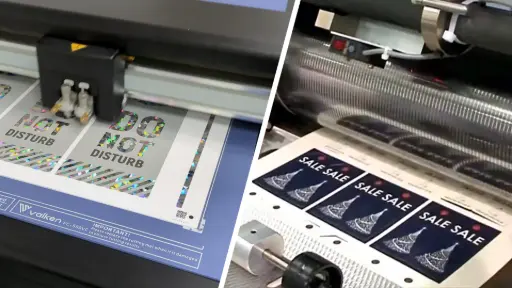
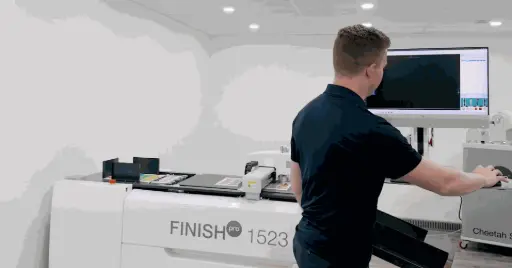
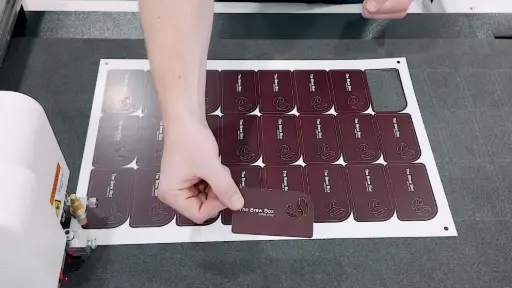
These are relatively easy to identify because they appear as part of the job's price.
For a large production run, these costs may be reasonable. A high-volume order can spread setup and tooling expenses across a much larger number of pieces.
Short runs are a different story.
When a customer only needs 100, 250, or 500 pieces, fixed costs can represent a much larger portion of the overall job.
But there's another side to the calculation.
The cost you don't see
Turnaround time deserves its own place in the calculation. What happens between sending a job out and receiving it back?
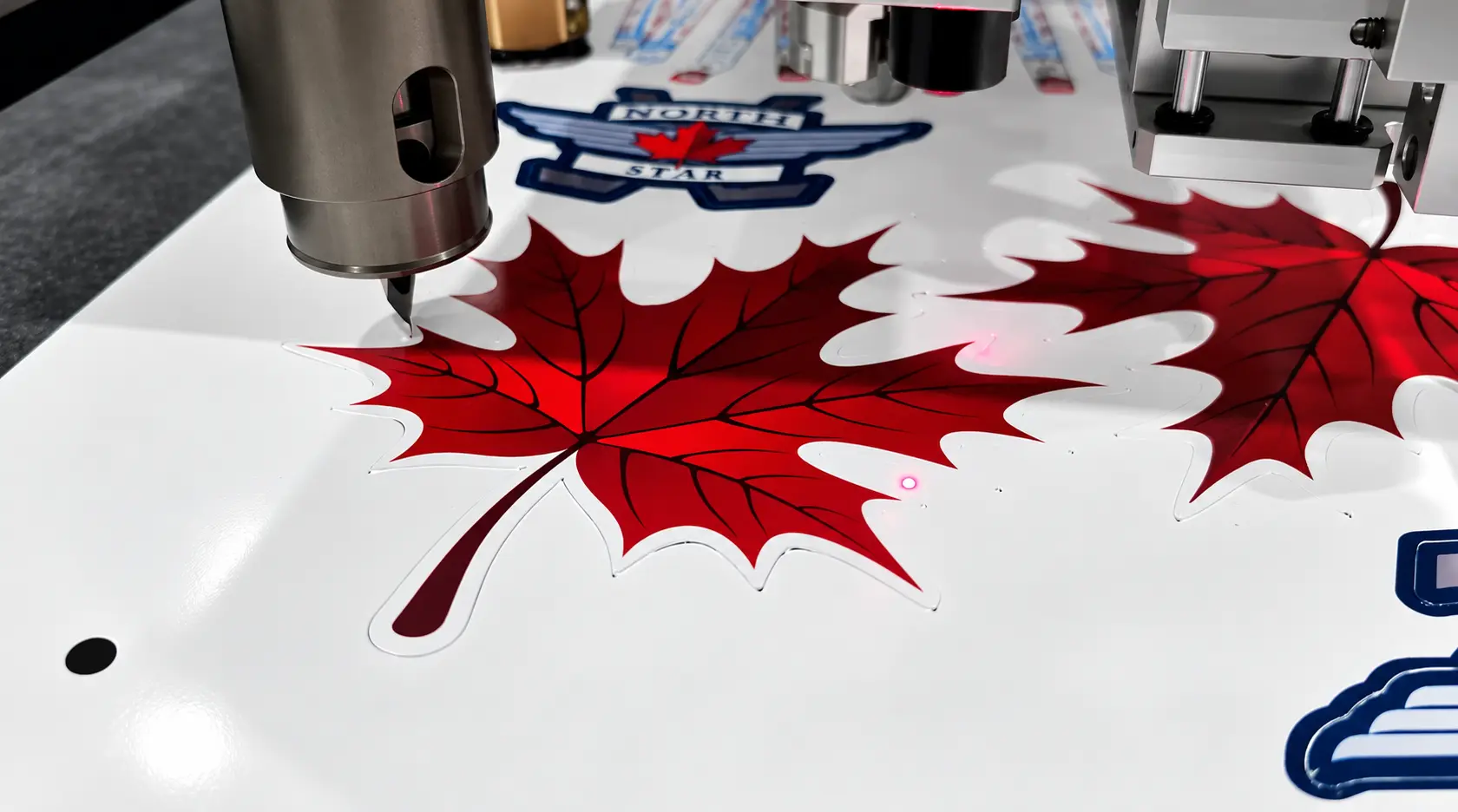
When die cutting is outsourced, the finishing stage depends on another company's schedule. Even if the finishing itself only takes a short amount of time, the overall job may take longer because of transportation, scheduling, and queue times.
Even when the cost doesn't appear on the invoice, it still affects your workflow.
And then there's the biggest question:
What could you have done with that time and production capacity if the work had stayed in-house?
That's where opportunity cost comes in.
What is the opportunity cost of outsourcing?
In simple terms, opportunity cost is the value of an alternative you give up when you choose one option over another.
For die cutting, the decision isn't simply: “Do we pay for outsourcing or buy a machine?” It's also: “What are we giving up by continuing to outsource?”
That could mean giving up the ability to:
- Take on smaller jobs
- Meet tighter deadlines
- Produce prototypes quickly
- Make last-minute changes
- Offer custom shapes
- Accept jobs that aren't economical to outsource
- Have more control over the production process
With in-house die cutting, your team has the option to handle those jobs as part of its own production workflow.
A small job can represent a bigger opportunity
Consider a customer looking for 200 custom-shaped promotional pieces.
The order may be too small to make outsourcing particularly attractive. There may be setup costs, tooling, and shipping involved.
So the print shop decides not to take the job.
On paper, there was no loss. The shop didn't spend money producing an unprofitable order.
But there was still an opportunity cost.
The business lost the revenue from that job. It may also have lost the chance to build a relationship with that customer or turn the small project into a larger future order.
That's not just a hypothetical situation. AlphaGraphics Seattle, for example, was able to add more than $275,000 in new business after installing a digital die cutter, allowing the shop to take on work it previously had to turn away.
This is why short-run die cutting costs shouldn't always be evaluated on the basis of individual production expenses. Sometimes the more important question is what the production capability allows you to say yes to.
In-house die cutting isn't just about saving money
This is an important distinction.
When businesses evaluate in-house die cutting, the conversation often starts with cost savings.
And yes, reducing outsourcing expenses can be part of the calculation.
But it isn't the only potential benefit. Having the capability in-house can also help a print provider:
Control the schedule
You're less dependent on another company's production calendar.
Respond to customers
Small or urgent requests can be easier to accommodate.
Test new applications
Prototypes and samples can be produced without committing to a big outsourced order.
Keep production together
Printing and finishing can happen within the same workflow.
These benefits are harder to put into a simple cost-per-piece calculation, but they're still part of the business decision.
When outsourcing still makes sense
None of this means outsourcing is automatically the wrong choice. For some print providers, it remains the most practical option.
If die cutting is an occasional requirement, the cost of purchasing and operating equipment may not be justified. Outsourcing can also make sense for high-volume production or specialized applications that don't fit your in-house capabilities.
The goal isn't to eliminate outsourcing. It's to understand where outsourcing works and where it may be limiting your business.
Where FINISHpro fits
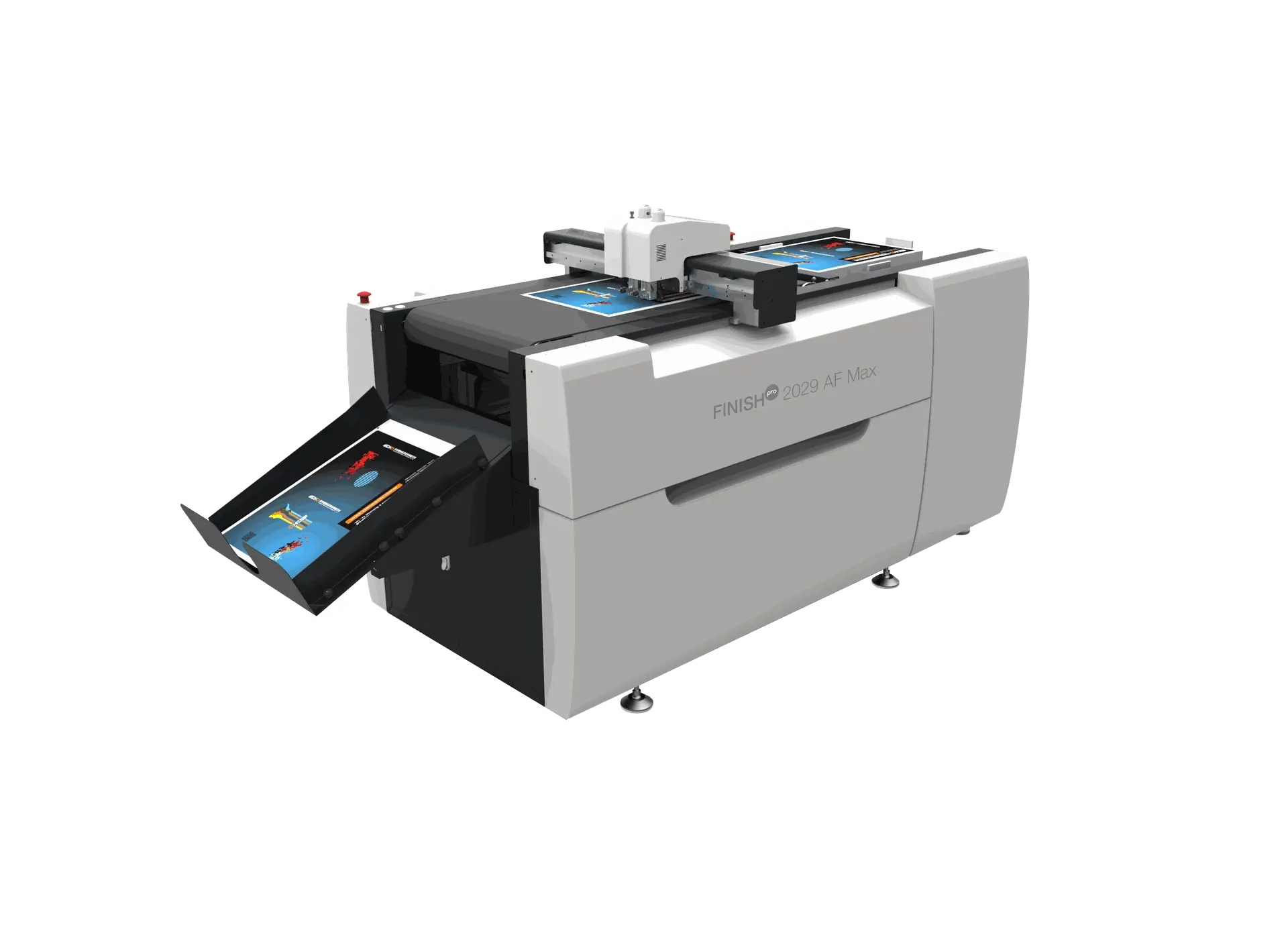
FINISHpro 2029AF Max
For print providers looking to bring more short-run work in-house, the FINISHpro 2029 AF Max is one example of a digital die cutter built for this type of production.
Its 20" × 29" cutting area makes it suitable for applications such as shaped cards, labels, invitations, small packaging, tags, and other customized print work. The range of materials a digital die cutter can handle can also expand the types of applications a shop can take on.
For shops considering different digital die-cutting options, we've also covered several machines and their applications in our guide to best digital die cutters.
So, when does in-house beat outsourcing?
There isn't a universal number.
The right answer depends on your production volume, job mix, equipment costs, labor, outsourcing rates, and the value of having more control over your workflow.
If your shop regularly handles short-run work, custom shapes, prototypes, or time-sensitive projects, start with the jobs you're already outsourcing. How much are they costing? How much time are they taking? How often are setup and shipping added to the bill? How many potential jobs are you turning away?
These questions will give you a much clearer picture than looking at the price of a machine alone.
Final Thought
The true short-run die cutting cost isn't always reflected in the price of an outsourced job. For print providers, the bigger consideration is whether outsourcing is making certain jobs slower, less flexible, or simply not worth taking on. Sometimes the value of bringing a process in-house isn't just what you can save. It's what you're able to do next.
At Skandacor, we help print providers across Canada, USA, Europe, and beyond find practical finishing solutions that fit the way your shop works.
More to Explore
Want to explore more about digital die cutting and finishing? Here are a few more related Skandacor articles:


