Short-run packaging equipment can help make packaging jobs more practical by giving shops the flexibility to produce smaller quantities and adapt to changing requirements without relying entirely on high-volume production methods. As print providers expand beyond traditional commercial print, packaging can be a natural area for growth. The challenge is finding a production approach that makes sense for these shorter runs.
In this article, we'll look at what makes short-run packaging different, what to consider when choosing equipment, and how digital die cutting can fit into a small print shop's broader production workflow.
What Makes Short-Run Packaging Different?
Short-run packaging has a different production profile from high-volume repeat work.
Large packaging runs can justify dedicated tooling and highly standardized processes because the same design may be produced thousands of times. Shorter runs may not offer the same economics, particularly when the package changes frequently.
A smaller packaging order may involve:
- Different dimensions from one job to the next
- Multiple versions of the same package
- Custom shapes or structural elements
- Short production windows
- Packaging prototypes or proofs
- Different substrates and thicknesses
The finishing process therefore needs to accommodate change.
Packaging Is More Than Printing a Flat Sheet
The printed artwork is only one part of a finished package.
A folding carton, sleeve, folder, or insert may require several finishing steps before it becomes a usable product. Cut lines define the shape, while crease lines determine where the material folds. Depending on the application, additional processes such as lamination, gluing, or assembly may also be involved.
That means equipment selection should account for the entire finishing workflow, not just the cutting stage.
This can open up new applications for shops that are already producing commercial print. Existing print capabilities can be paired with digital finishing, allowing shops to produce packaging without treating it as an entirely separate production category.`
What Can Make a Short-Run Packaging Job Difficult?
The challenge with short-run packaging isn't simply cutting the package. It's making sure each part of the finishing process works together consistently.
Registration
Registration is one consideration. The cutting path needs to align accurately with the printed artwork, particularly when graphics, borders, or other design elements sit close to the cut line.
Creasing
Creasing is another. A package can be cut accurately and still be difficult to fold if the crease isn't suited to the material or the structure of the package.
Substrate
Substrate also plays a role. Different stocks can respond differently to cutting and creasing, and some materials may require different tooling or settings to achieve the desired result.
Job Changeover
Then there's job changeover. A shop producing several short runs may move between different designs, sizes, materials, and finishing requirements throughout the day. The ability to transition between jobs efficiently can therefore be just as important as the machine's cutting capability.
These considerations can have a significant impact on short-run production, where setup, material changes, and revisions can all affect efficiency.
What Does a Small Shop Actually Need?
There is no single checklist that defines the right packaging setup.
The right setup depends on what your customers need, what materials you work with, and how often packaging is part of your production mix. Knowing how to choose a packaging equipment starts with looking at the work your shop actually handles.
Questions to ponder
Instead of asking, “What is the best packaging machine?," consider a more useful set of questions:
Look at actual inquiries rather than hypothetical applications. Boxes, sleeves, folders, inserts, and prototypes can each create different equipment requirements.
The stocks used for packaging can vary significantly. Thickness, rigidity, surface characteristics, and construction all affect how a material should be finished.
Cutting may be only one stage. Depending on the package, the job may also require creasing, folding, gluing, or assembly.
If packaging represents only a portion of the shop's workload, equipment that can handle other specialty applications may provide more practical value than a system dedicated to packaging alone.
Why Digital Cutting Fits Short Runs
Traditional die cutting remains a strong option for repeat production, particularly when the same design is produced at high volumes.
Short-run work can be different.
When package dimensions, shapes, or designs change frequently, producing a physical die for every variation can add time and cost to the process. Digital cutting takes a different approach by using a digital file to define the cutting path.
This means the cutting pattern can be changed when the design changes.
For packaging, that flexibility can be useful for:
- Structural prototypes
- Short-run folding cartons
- Product sleeves
- Presentation folders
- Inserts and promotional packaging
- Multiple package variations
- Custom-shaped packaging components
Digital cutting can also be useful during the prototyping and approval stages of the packaging process.A physical proof can help a customer evaluate the structure, dimensions, and overall appearance before committing to a larger production run.
One Cutter, More Than One Application
The term small-run packaging machine can make the equipment sound limited to small applications. In practice, the more important consideration is what else the machine can produce.
This is where a versatile digital finishing system can make sense for a smaller print provider.
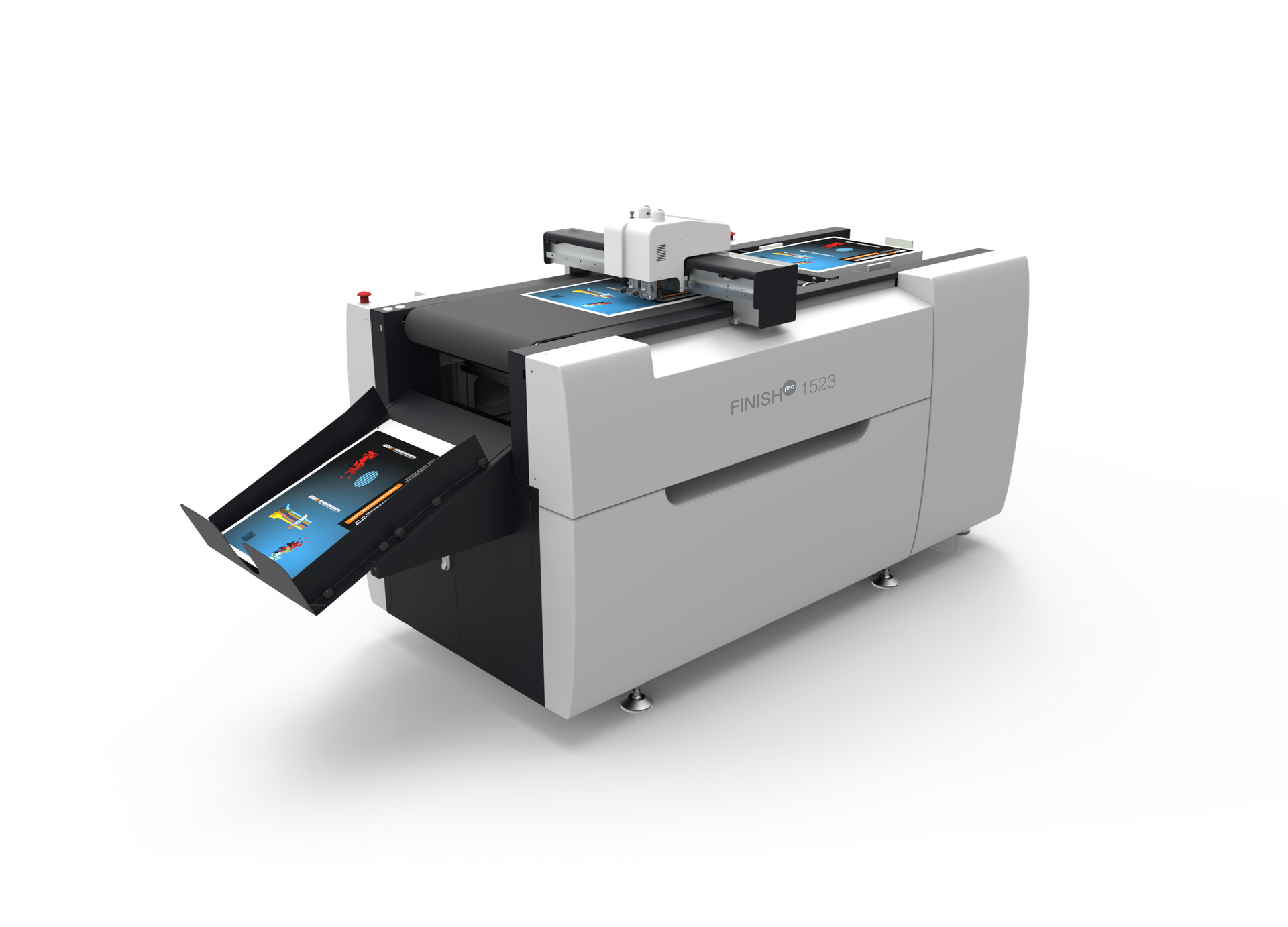
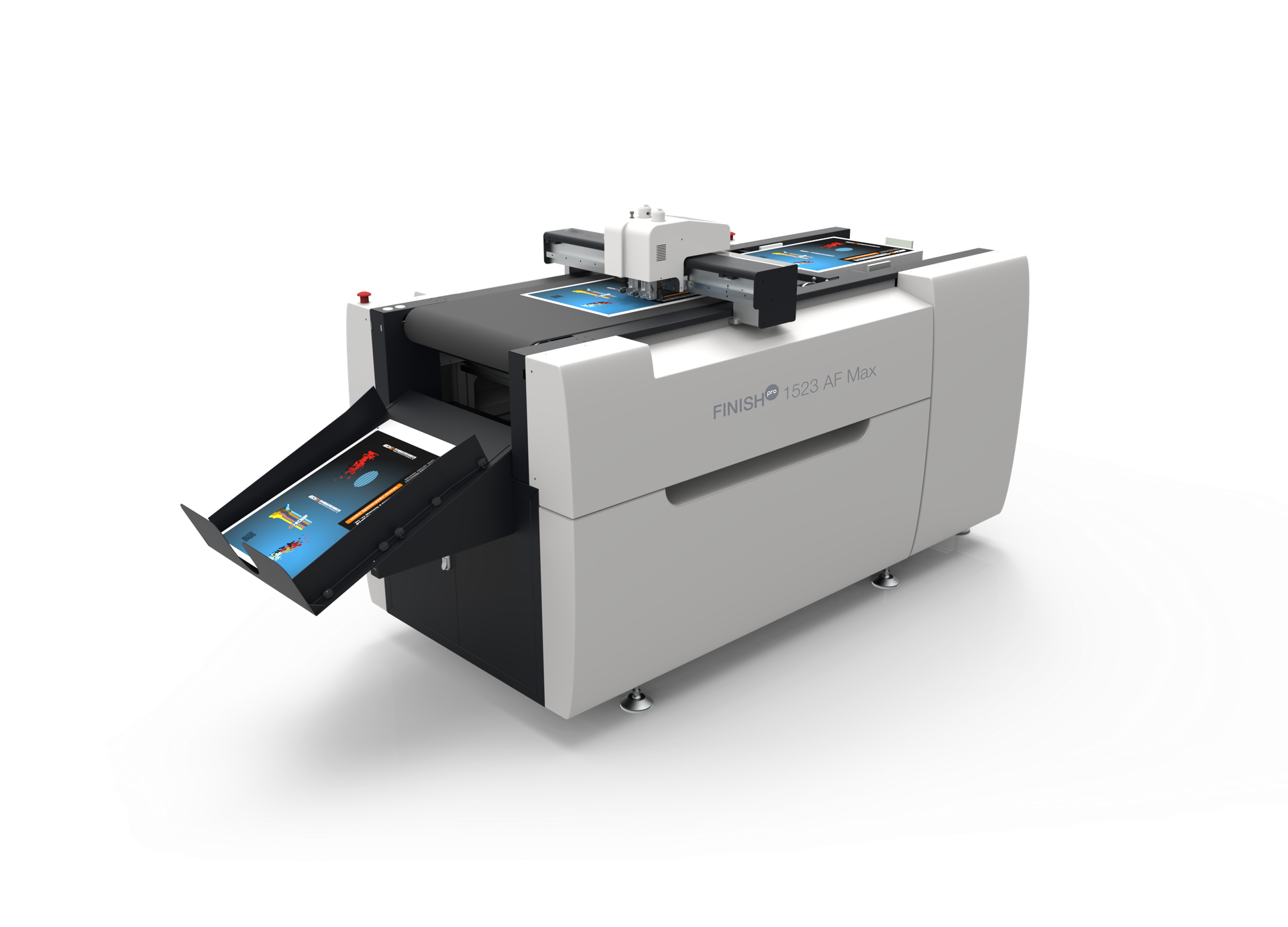
Skandacor's FINISHpro digital die cutters are designed for different production requirements and applications. The FINISHpro 1523 AF and FINISHpro 1523 AF Max both provide a 15" × 23" cutting area. The AF is designed for standard print finishing, while the AF Max offers greater material capacity for thicker and more varied substrates.
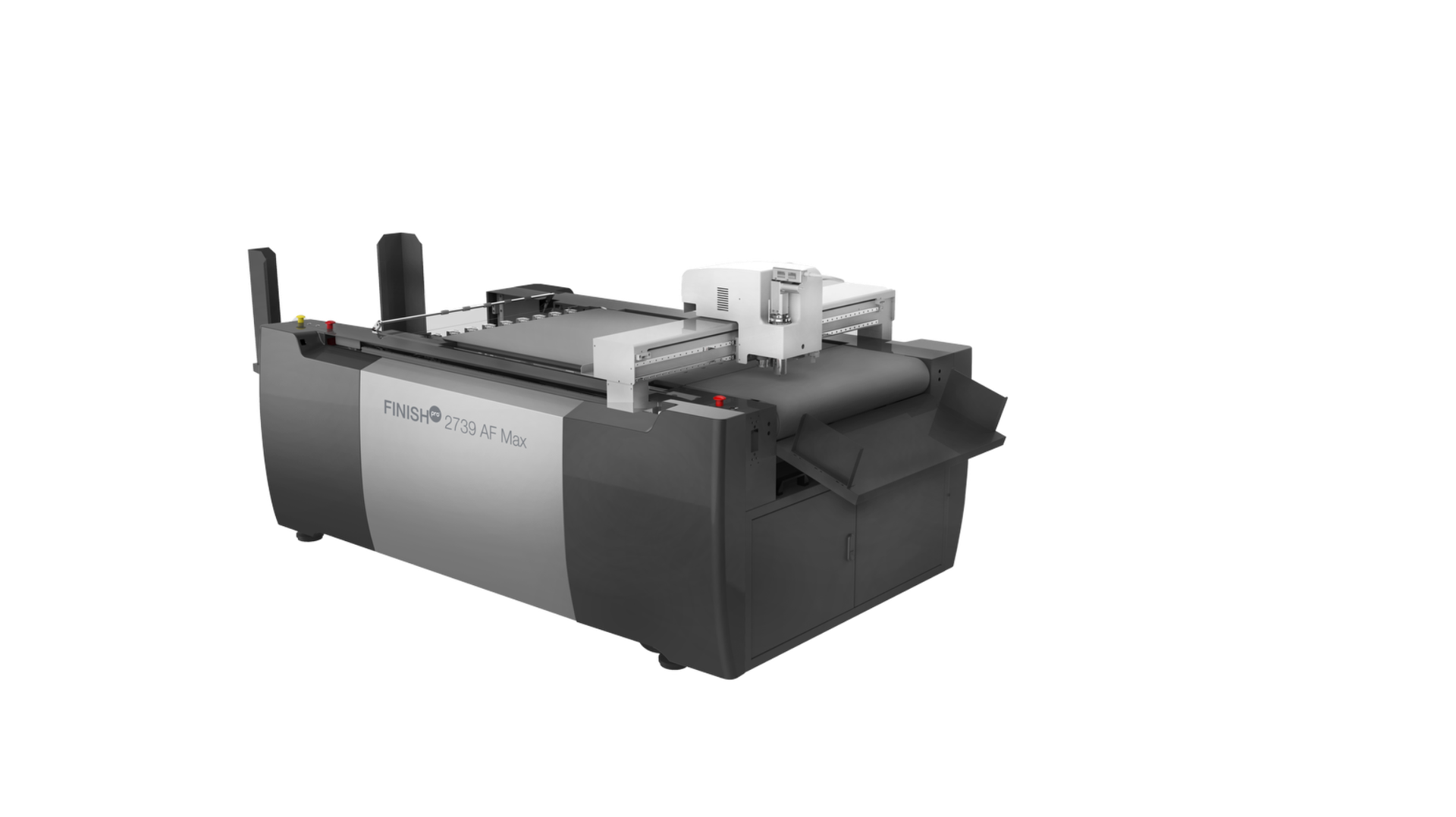
For applications requiring a larger working area, the FINISHpro 2739 AF Max offers additional space for larger-format jobs.
FINISHpro 1523 AF
If most of your work involves standard print materials and you need a compact digital cutting solution, the FINISHpro 1523 AF may be a good fit. Its 15 × 23-inch cutting area is suited to applications such as business cards, invitations, labels, tags, adhesive sheets, and small packaging.
Consider this model if: you primarily work with paper, sticker stock, and card stock and want to add digital cutting without moving into larger or thicker-material applications.
FINISHpro 1523 AF MAX
Want to go beyond standard print? The FINISHpro 1523 AF Max keeps the compact 15 × 23-inch format while giving you the ability to work with materials up to 6 mm thick.
This can open the door to applications such as specialty cards, packaging samples, signage, foam board projects, and magnetic applications.
Consider this model if: you want a smaller-footprint cutter but don't want to be limited to standard paper-based applications.
FINISHpro 2739 AF MAX
Need to take on larger custom work? The FINISHpro 2739 AF Max offers a 39 × 28-inch cutting area and can process materials including foam board, cardboard, sticker stock, magnetic sticker stock, and corrugated plastic.
Think custom signage, packaging prototypes, displays, magnetic graphics, and short-run specialty projects.
Consider this model if: you're looking to expand beyond conventional print and bring larger, customized applications in-house. Its four fixed knife holders and general-purpose tool holder also give you flexibility to switch tools depending on the job.
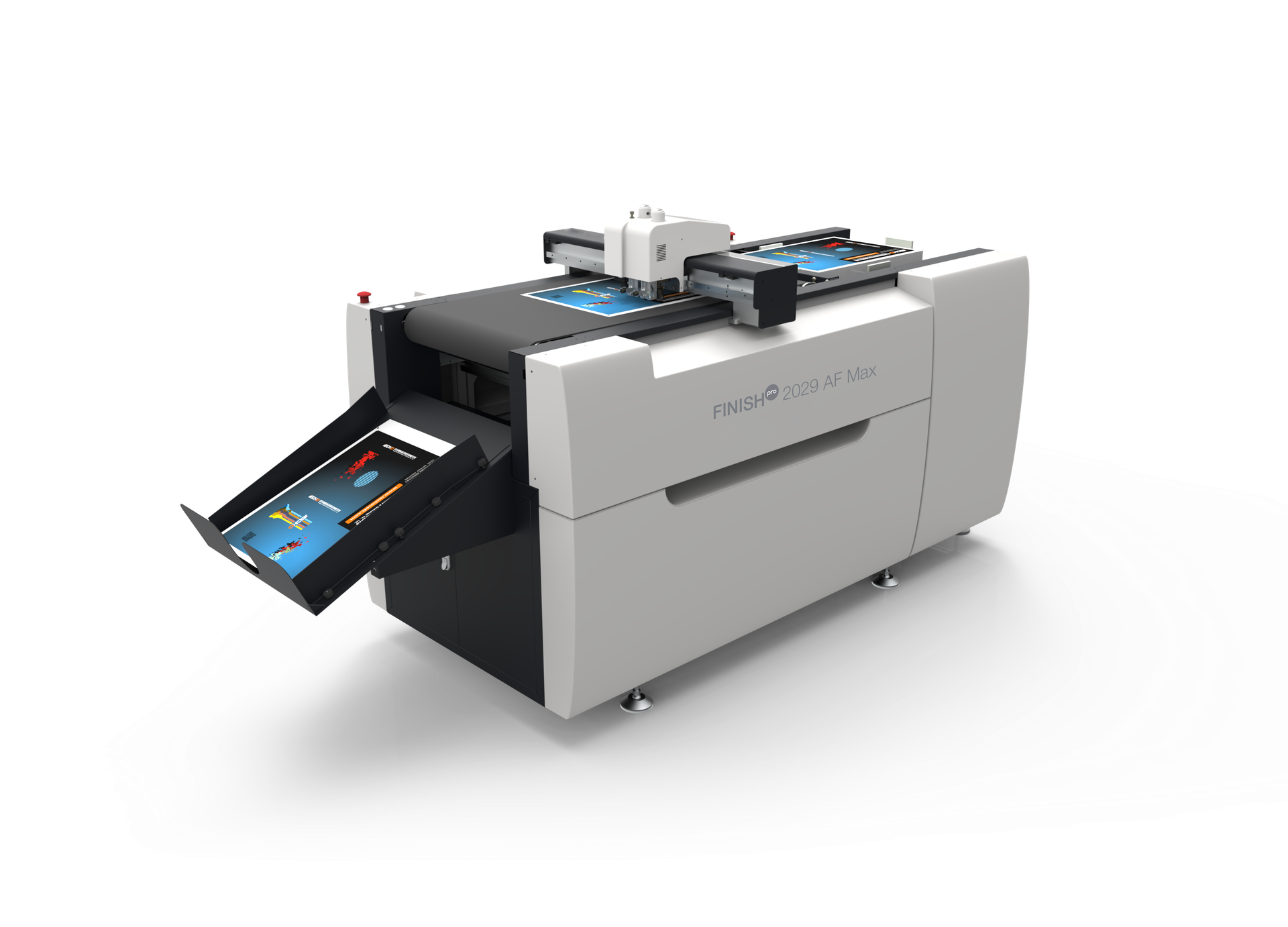
FINISHpro 2029 AF MAX
If you like the broader material capabilities of the AF Max but need more cutting space, the FINISHpro 2029 AF Max gives you a 20 × 29-inch cutting area and material capability up to 6 mm.
That combination can be useful for larger packaging samples, displays, specialty print, and customized short-run work.
Consider this model if: you want to handle thicker or specialty materials while having more room for larger jobs.
FINISHpro 3547 AF MAX
If your work regularly calls for larger sheets and applications, the FINISHpro 3547 AF Max takes the cutting area up to 47 × 35 inches while offering the same broad material range as the 2739 AF Max.
This makes it a potential fit for large-format signage, displays, packaging, magnetic graphics, and other specialty applications where a larger work area can make production more practical.
Consider this model if: large-format work is already part of your business—or you're planning to make it a bigger part of what you offer.
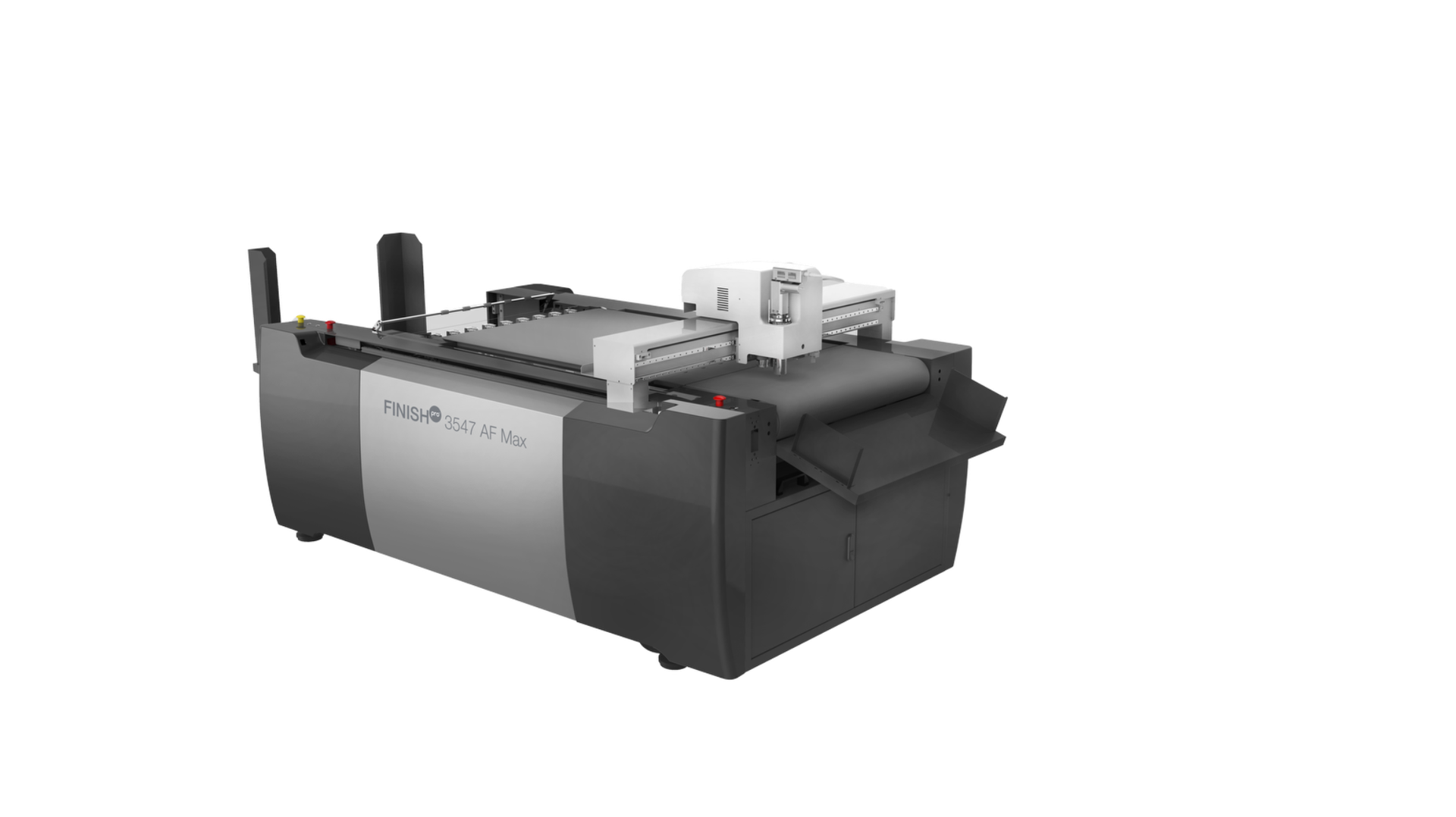
Depending on the model, tooling, and substrate, FINISHpro systems can support packaging applications such as cartons, folders, prototypes, and structural pieces. The same equipment can also be used for labels, stickers, cards, magnets, tags, displays, and other specialty print applications.
That versatility can be particularly relevant for smaller shops. If packaging represents only part of the workload, the equipment doesn't have to sit idle between packaging orders.
When Is Short-Run Packaging Equipment Worth Considering?
There isn't one order quantity that determines whether a shop needs short-run packaging equipment.
Instead, look at the type of work you're receiving.
It may be worth considering when your shop is regularly:
- Outsourcing smaller packaging jobs
- Receiving requests for customized packaging
- Producing multiple package formats
- Creating packaging prototypes or mockups
- Working with short production schedules
- Turning away packaging work because of finishing limitations
- Looking for additional applications for your finishing equipment
These can be signs that packaging is becoming more than an occasional request. It could be an opportunity to expand the shop's finishing capabilities.
Final Thought
Small print shops don't need to compete with high-volume packaging manufacturers to make packaging a worthwhile service.
They need a finishing setup that can handle the quantities they receive, the materials they work with, and the variety their customers request. A versatile digital die cutter can be part of that setup, particularly when packaging is only one of the applications the shop wants to pursue.
Skandacor provides digital finishing solutions for print providers across Canada, USA, Europe, and beyond. Explore the FINISHpro line to see how digital die cutting can fit into your shop's production workflow.