Looking to add digital foiling to your print services but not sure which hot foiling machine is right for your shop? With different systems offering varying capabilities, from automatic foil transfer to raised UV embellishment and combined laminating and foiling, narrowing down your options can take some research.
So, where do you start? We've put together this guide to help you understand what sets these options apart. We'll explore what different machines can do, the types of projects they can handle, and the foil finishes available through Skandacor. By the end, you'll have a better understanding of which equipment is worth considering for your production needs.
Hot Foil Press Machine: Which Foiling Process Fits Your Work?
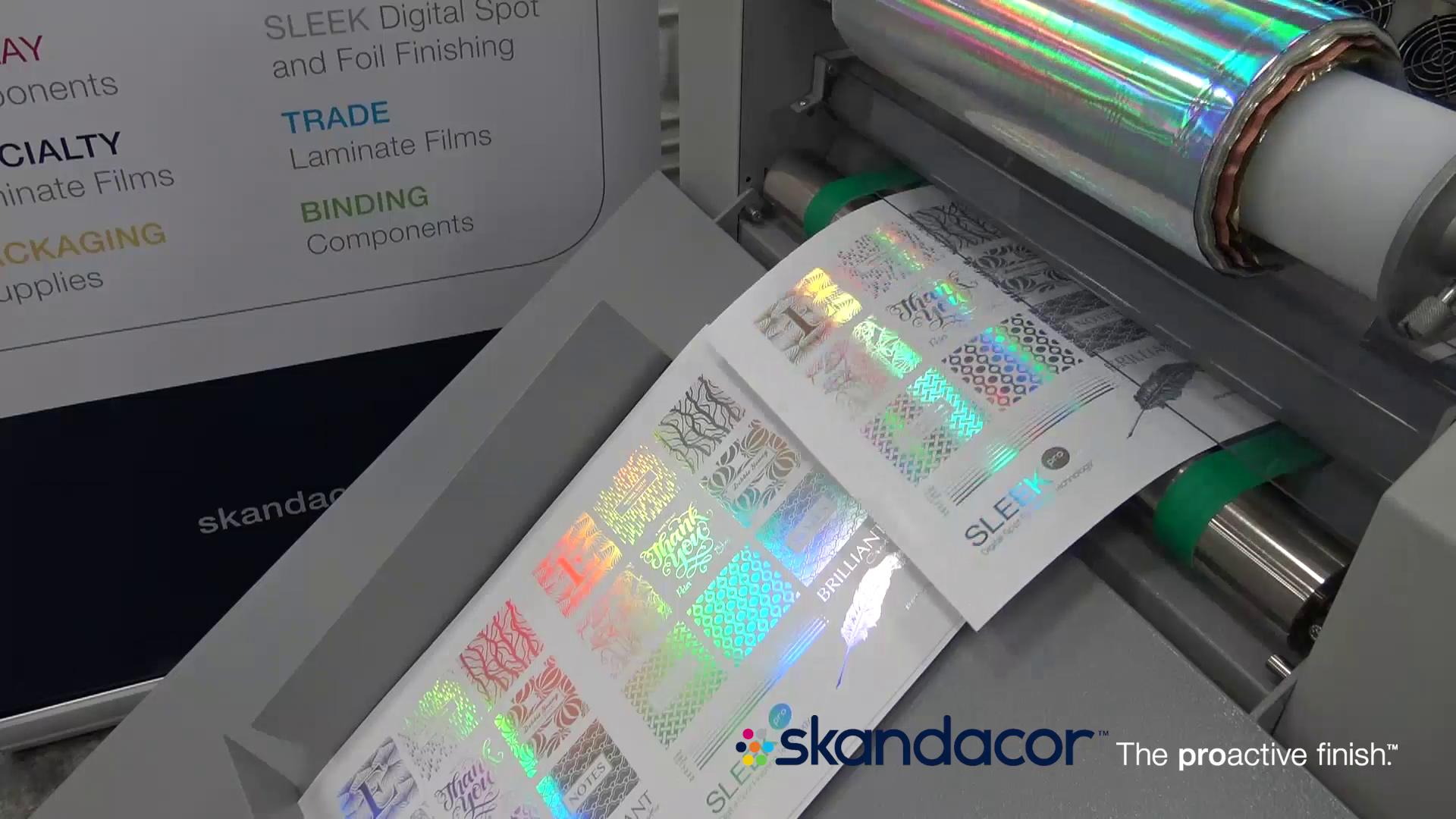
First, it's important to understand that not all foiling machines use the same technology. Traditional hot foil stamping and digital foiling can both produce metallic effects, but they work differently.
If you regularly produce repeat designs, traditional hot foil stamping may be worth considering
A traditional hot foil press machine uses a heated metal die and pressure to transfer foil onto a substrate. The design is engraved onto a custom die, which presses the foil against the material to create the finished impression.
This process is commonly used for packaging, stationery, invitations, and other applications where the same design is produced repeatedly. However, each new design generally requires its own die, which adds tooling costs and preparation time.
If your projects involve customized artwork or shorter production runs, digital foiling may be another option.
Digital foiling transfers foil onto designated areas of compatible printed artwork without requiring a custom stamping die for every design. This can make it useful for personalized projects, variable designs, and jobs that change frequently.
For example, if you're looking for a hot foil machine for card making, consider the kinds of cards your customers request. Business cards, greeting cards, and invitations may all benefit from foil embellishment, but the best process will depend on the artwork, substrate, and production requirements.
Skandacor offers several digital foiling solutions:
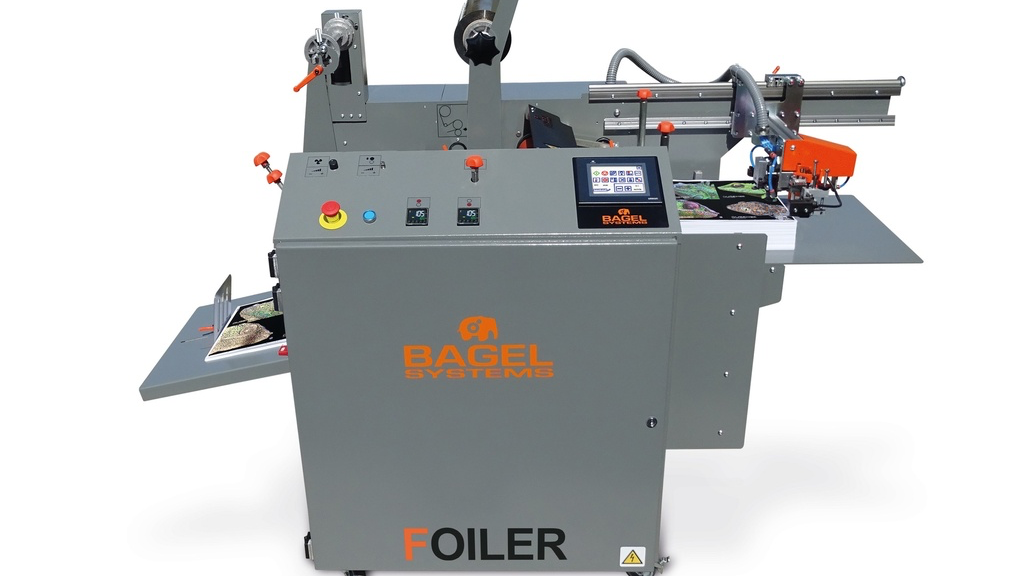
FOILER B3 Auto
An automatic digital foiling system that uses heat and pressure to transfer foil onto compatible printed materials.
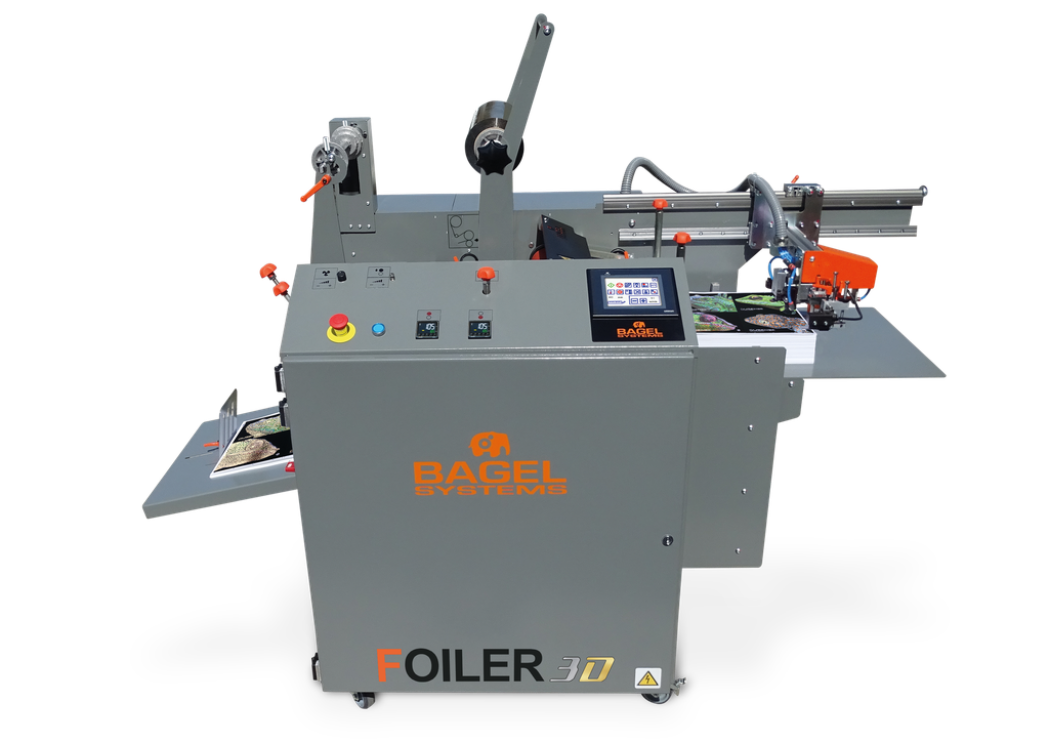
FOILER 3D Auto
A digital foiling system that applies metallic and holographic effects to raised UV finishes, uncoated paper stocks, and other hard-to-foil surfaces.
As you explore these options, consider how each system would fit into your existing print finishing equipment setup. You may already have some of the capabilities needed to complete these jobs, while others could require an additional finishing process.
Commercial Laminating Equipment: Do You Need More Than Foiling?
Foil can add decorative details to a printed piece, but what if you also want to change its overall surface appearance or provide additional protection?
That's where lamination comes in.
Although foiling and lamination serve different purposes, they can complement each other in the same production process. For example, you could apply a matte film to a printed business card and use metallic foil to highlight its logo. The combination creates contrast between the overall surface and the embellished areas.
If you plan to offer both services, it's worth looking at the available commercial laminating equipment and how it could support your production needs.
Different configurations accommodate different applications:
Single-sided laminators apply film to one side of a printed sheet.
Duplex laminators laminate both sides of a sheet.
Encapsulation systems enclose printed materials between protective film layers.
Roll laminators use rolls of film and are available in configurations suited to different sheet sizes and production requirements.
For larger production environments, industrial laminating machines, such as the DigiFav DS B3, offer advanced laminating capabilities for a variety of professional print finishing needs.
The film you choose also affects the finished product. Gloss film creates a reflective surface, matte film provides a more understated appearance, and silk laminate offers a smooth, refined finish that works well for premium printed materials.
Of course, adding lamination means accounting for both equipment and consumables. If you're researching how much are laminators, don't look at the machine's purchase price alone. Consider its configuration, production capacity, accessories, and the ongoing cost of laminating film.
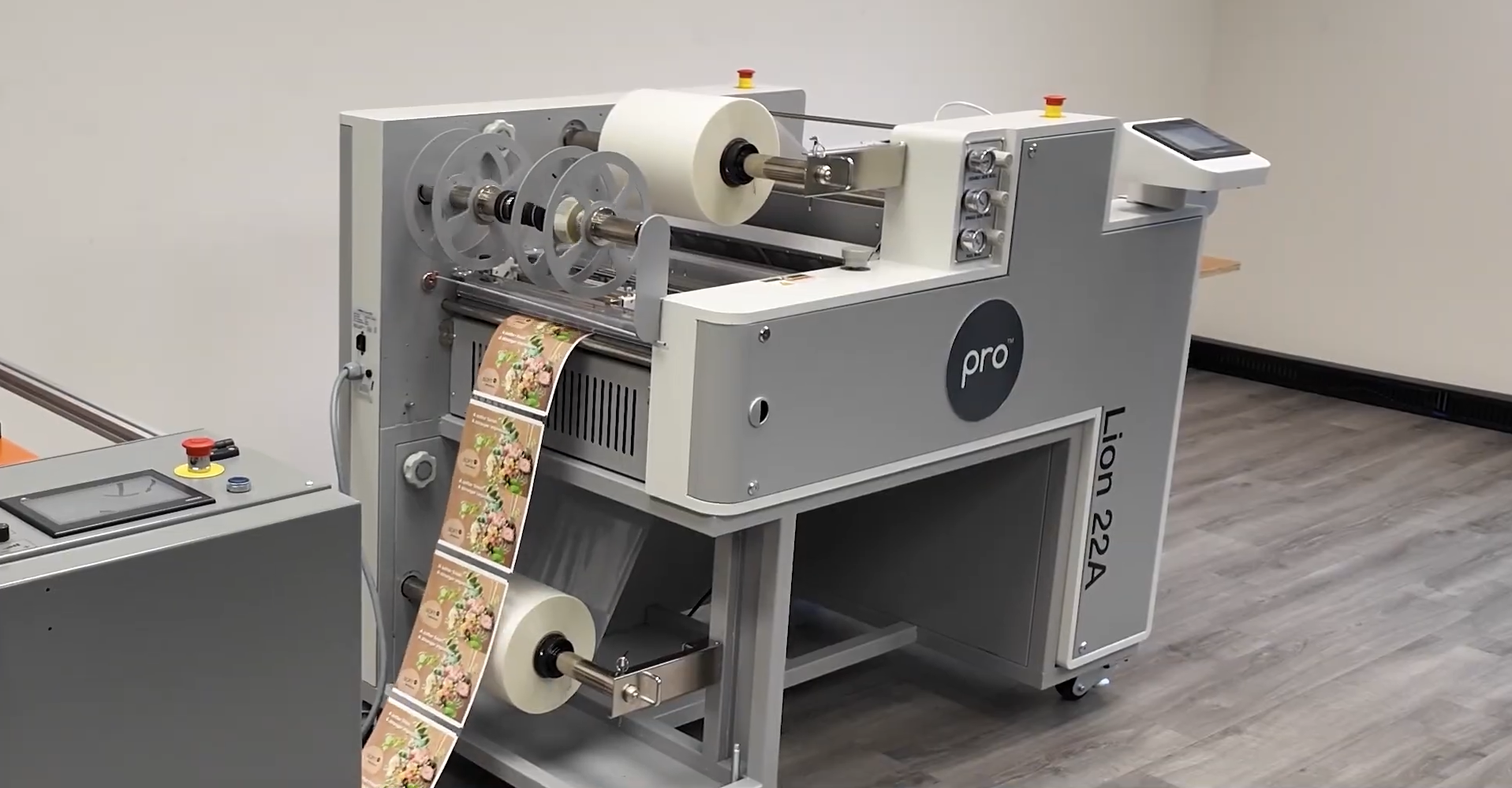
You may also want to explore equipment that combines laminating and digital foiling capabilities. Skandacor's LAMpro lineup includes options with different configurations:
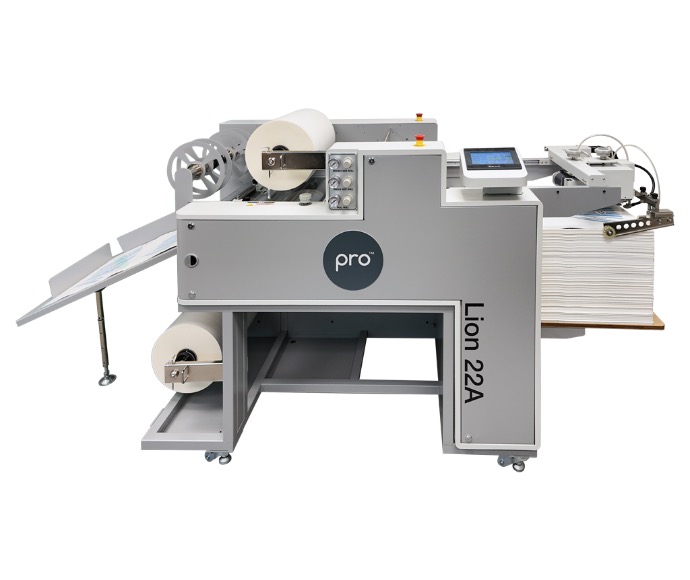
LAMpro Lion 22A
Offers single-sided and duplex lamination, encapsulation, and SLEEKpro digital foiling capabilities. Its range of functions makes it an option for print shops handling different types of laminating and embellishment jobs.
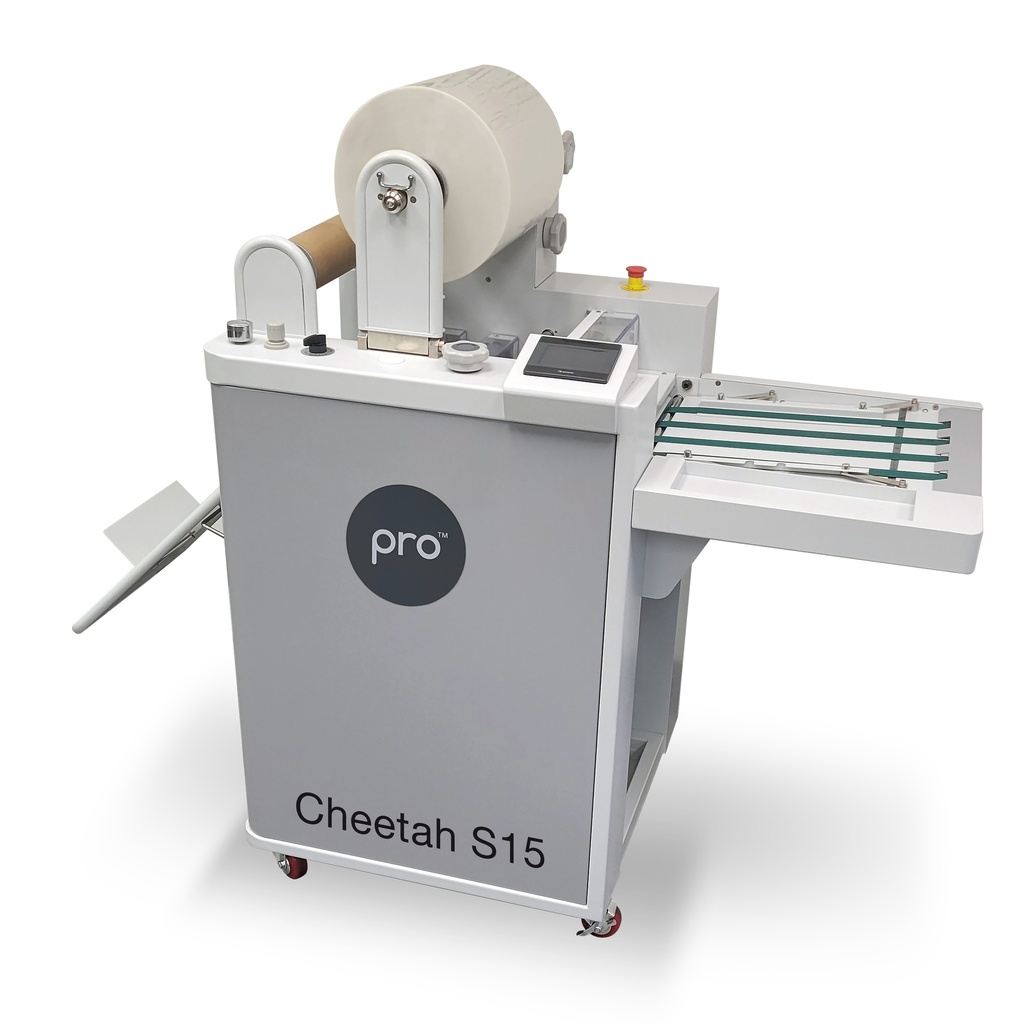
LAMpro Cheetah S15
Combines laminating with SLEEKpro digital foiling and features a flying knife system that cuts and separates sheets during processing.
Both machines bring laminating and digital foiling capabilities together, but their configurations serve different production requirements. Consider the applications you handle, the sheet sizes you process, and whether you need functions such as duplex lamination or encapsulation.
If you're planning to handle projects that require several finishing stages, a combination system may help you make better use of your available production space.
But what does this look like in a real application? Let's take a closer look at labels.
Label Finishing: Adding Finishing Touches
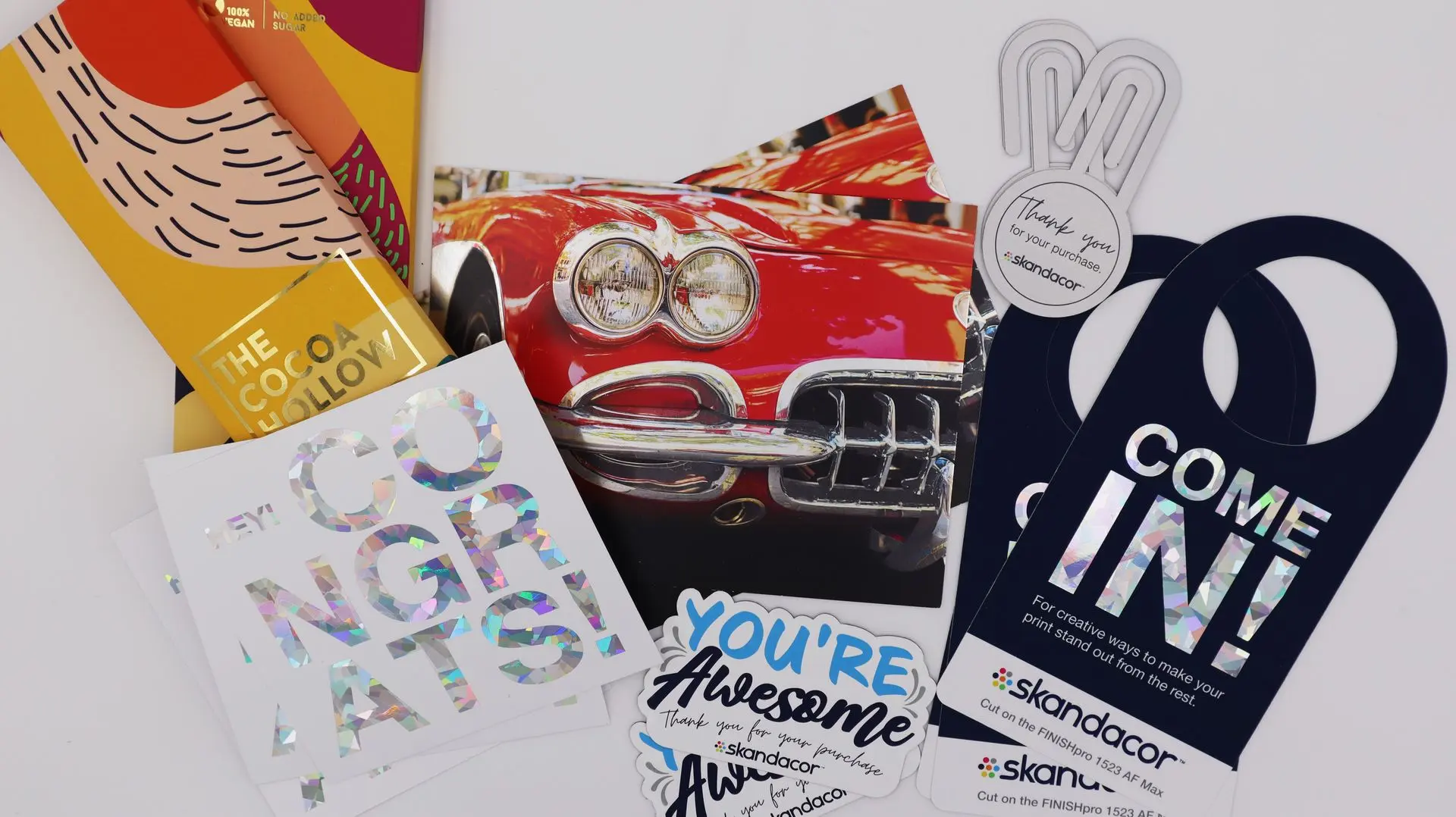
Product labels are a good example of how multiple finishing techniques can contribute to one printed piece. A label may need to communicate product information, highlight a brand logo, and maintain a particular appearance depending on the product and its intended use.
If you're considering expanding into label finishing, start by identifying the types of labels your customers need.
Do your customers want metallic details?
Foil can highlight product names, logos, borders, and other design elements. Depending on the application, a compatible foil laminator machine may be suitable for transferring foil onto printed materials. A digital foil printer machine may also be relevant when you're exploring digital embellishment options. These terms can refer to different equipment configurations, so it's important to understand the actual transfer process rather than assuming all systems work alike.
At Skandacor, digital foiling is part of a range of print finishing solutions designed to help print shops add decorative effects to their work. Through SLEEKpro Foiling, you can explore different foil colors, finishes, and patterns to complement your label designs and other printed applications.
Do the labels need additional surface protection?
A sheet lamination machine can apply film to compatible printed sheets, helping achieve a particular surface appearance or provide additional protection. The appropriate film will depend on the label material and its intended application.
How will the finished sheets be handled?
Foiling and lamination aren't necessarily the final steps. Depending on the job, you may still need to trim, separate, or prepare the sheets for the next stage of production.
For example, the LAMpro Cheetah S15's flying knife system can cut and separate sheets during processing. This can be useful when your production setup requires those additional capabilities.
Keep in mind that not every label stock is suitable for every finishing process. Adhesives, coatings, substrate thickness, and sheet dimensions can all affect the result. Before committing to a particular setup, confirm that the materials you regularly use are compatible with the equipment.
Once you've identified the applications you want to handle, you can start exploring the finishes that will help make those products stand out.
Sleeking Foil: Exploring Specialty Films for Print Embellishment
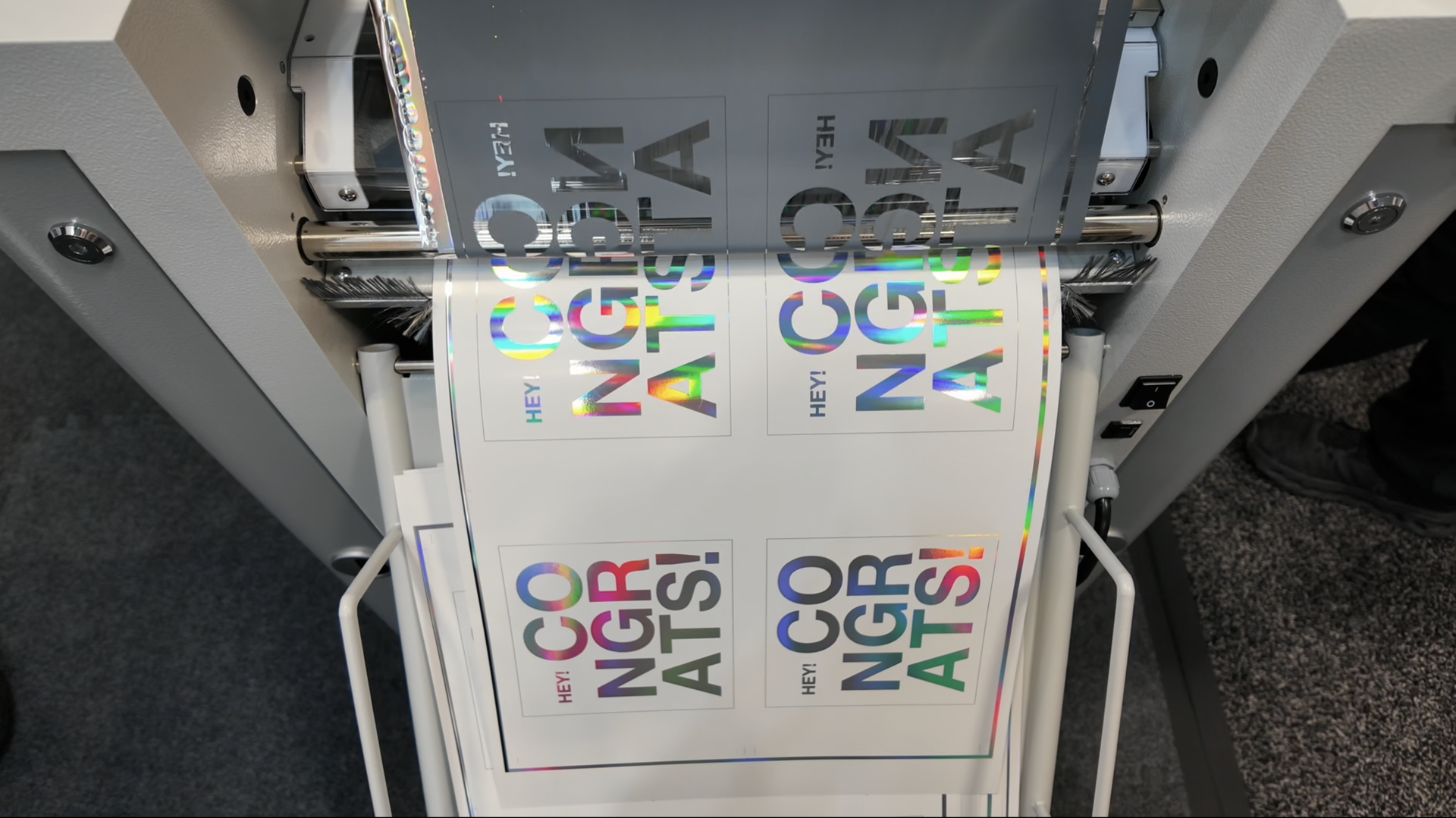
There's a lot more to foil embellishment than a shiny gold or silver accent. Color, texture, and pattern all play a part in how the finished design looks. That's where the variety of SLEEKpro films comes in, giving print shops more creative choices for different projects.
Here are some of the foil options and effects worth exploring:
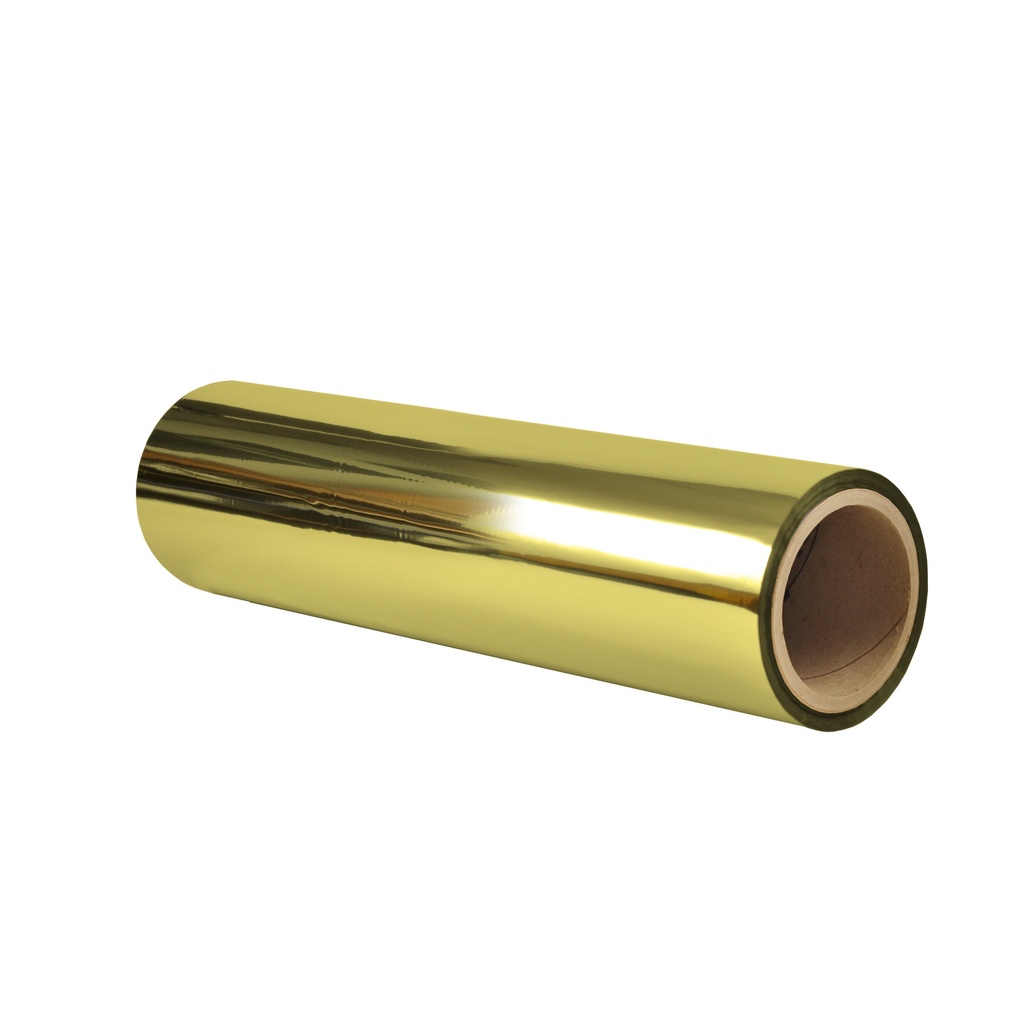
Metallic Foils
Metallic foils are a popular choice for adding reflective details to printed designs. Beyond traditional gold and silver, SLEEKpro offers colors such as copper, rose gold, red, green, blue, violet, and black. These options allow you to work with different color palettes and create finishes that complement a brand's visual identity.
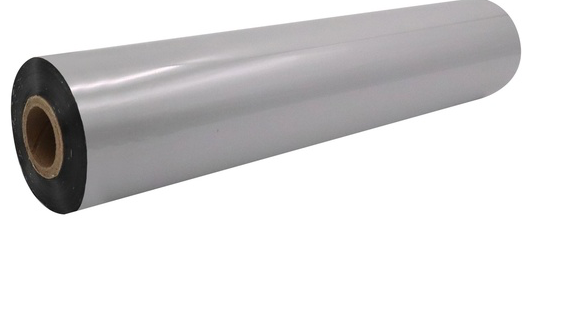
Matte and Satin
Not every design calls for a highly reflective finish. Matte and satin foils provide alternative surface appearances for projects where a softer metallic effect is preferred. For example, matte silver offers a more subdued look, while satin gold and satin red provide additional options for decorative accents.
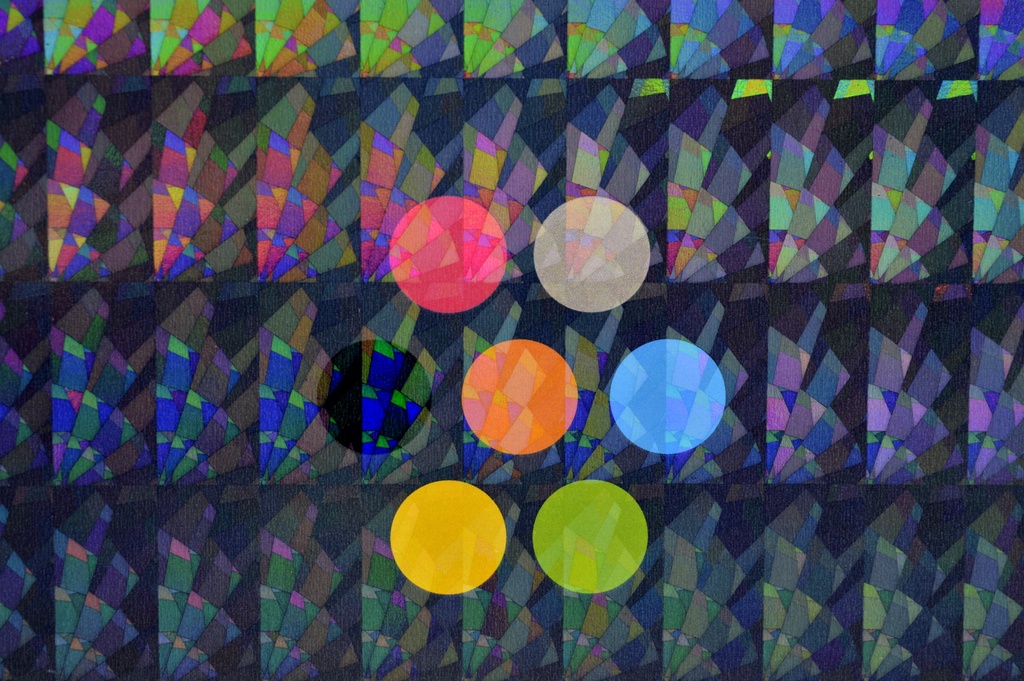
Clear Holographic Foils
If you're looking for more intricate visual effects, clear holographic films offer several patterns that interact with light. SLEEKpro options include Star Dust, Ripple, Mosaic, Crystal, Sparkle, and Glitter. These patterns can introduce different textures and visual details while allowing the printed artwork beneath them to remain visible.
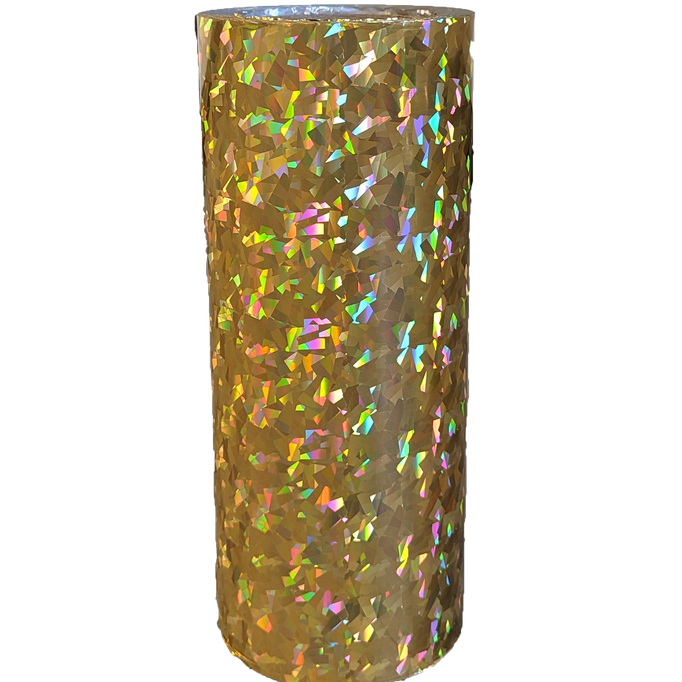
Holographic Metallic Foils
Holographic effects are also available in metallic finishes. Options such as silver and gold Crystal, Sparkle, and Glitter combine metallic color with patterned holographic effects. These can be used when you want both a recognizable metallic finish and additional visual texture.
Understanding Transfer and Cast Holographic Films
Beyond their appearance, holographic films also differ in how they work. SLEEKpro offers both transfer and cast options:
- Transfer films apply a foil layer onto the printed toner using adhesive. They create a more pronounced effect and are suited to applications where durability and a noticeable finish are important.
- Cast films create a holographic effect by embossing the toner without leaving a foil layer on the sheet. The result is more transparent, allowing the printed colors and details to remain prominent.
The distinction matters when planning your production sequence. Transfer films can withstand additional heat processing, while cast films are heat-sensitive and should be applied as the final finishing step.
With so many options available, sleeking foil gives print shops more flexibility in how they approach embellishment projects. When evaluating print finishing machines, it's worth exploring the foil materials they support and the effects those materials can produce. Requesting samples or arranging a demonstration can help you compare the finishes on actual printed pieces before introducing them into your production.
Ready to Make Your Investment?
By now, you should have a better idea of how different foiling technologies, laminating capabilities, and specialty finishes can contribute to your print services.
Before choosing a machine, bring your requirements together:
- Applications: What products do you want to offer? Consider business cards, invitations, labels, packaging, and other specialty print jobs.
- Foiling technology: Would traditional hot foil stamping or digital foiling better suit your artwork and production requirements?
- Additional capabilities: Would lamination, sheet separation, or other finishing functions benefit your setup?
- Materials: Are your regular substrates and supplies compatible with the equipment?
- Investment: Consider the machine's price, consumables, accessories, maintenance, and ongoing operating expenses.
- Support: Find out what training, installation assistance, and technical support are available after purchase.
Whether your print shop operates in Canada, the USA, or Europe, choosing the right supplier is just as important as selecting the equipment. If you're exploring wholesale purchasing or requesting a quotation, make sure you understand what's included and whether the proposed configuration meets your production requirements.
At Skandacor, we offer digital foiling systems, laminators with SLEEKpro technology, and complementary finishing equipment for different print production needs. Our team can help you explore available options based on the work you want to produce and the capabilities your business needs.
Ready to find a finishing solution that fits your shop?
Explore Skandacor's finishing equipment collection or contact our team to discuss your production goals.