For print shops considering laminator machines, year-end can be a particularly useful time to evaluate whether upgrading their equipment makes sense. As the year comes to a close, print businesses have more to think about than finishing current orders and preparing for the next busy season. It is also a good time to review equipment investments, assess production needs, and talk with a tax professional about opportunities to manage the business's tax burden.
The right equipment can do more than increase production capacity. It can help a shop improve consistency, expand its service offerings, and take on projects that would otherwise require outsourcing. With the right planning, investing in finishing equipment before year-end may also present tax advantages, depending on the business's circumstances and applicable tax regulations.
At Skandacor, we understand that equipment decisions involve more than comparing specifications. They require a clear understanding of what your shop produces today, where you want to take your business, and which investments can support those goals. Here is what to consider before making your next move.
1. How Print Finishing Can Strengthen Your Business
A printed piece can have a great design and still fall short of what a customer expects. The right finish can protect it from wear, enhance its appearance, and give it the polished look the project demands. For print shops, these details aren't just about aesthetics. They can influence what customers are willing to pay for and which jobs they're willing to bring to your business.
For print shops, investing in the right finishing equipment can help solve common production challenges while creating opportunities to offer more services.
Bringing finishing capabilities in-house can help businesses:
Reduce their reliance on outsourcing for specialized jobs..
Gain greater control over turnaround times and production schedules.
Expand their offerings with lamination, specialty finishes, and embellishment.
Create opportunities to offer higher-value products.
These capabilities can also influence how you price and position your services. Instead of competing on print cost alone, you can offer finished products tailored to different budgets, applications, and quality expectations. Keeping more production steps in-house may also give you greater control over turnaround times and quality, depending on your workflow and production capacity.
The key is to invest in capabilities that align with actual customer demand. Understanding which finishing services your customers need can help you prioritize equipment that supports your current workload while creating room for new business opportunities.
2. What Is a Laminator Machine and What Should You Know Before Buying One?
A laminator machine applies a thin film to a printed substrate, typically paper or cardstock, using heat, pressure, or a combination of both, depending on the machine and lamination process. The film bonds to the surface, creating a finished piece with added protection and a particular visual or tactile effect.
Lamination is widely used for business cards, brochures, book covers, menus, postcards, packaging, and other printed materials that need to withstand handling or achieve a specific appearance.
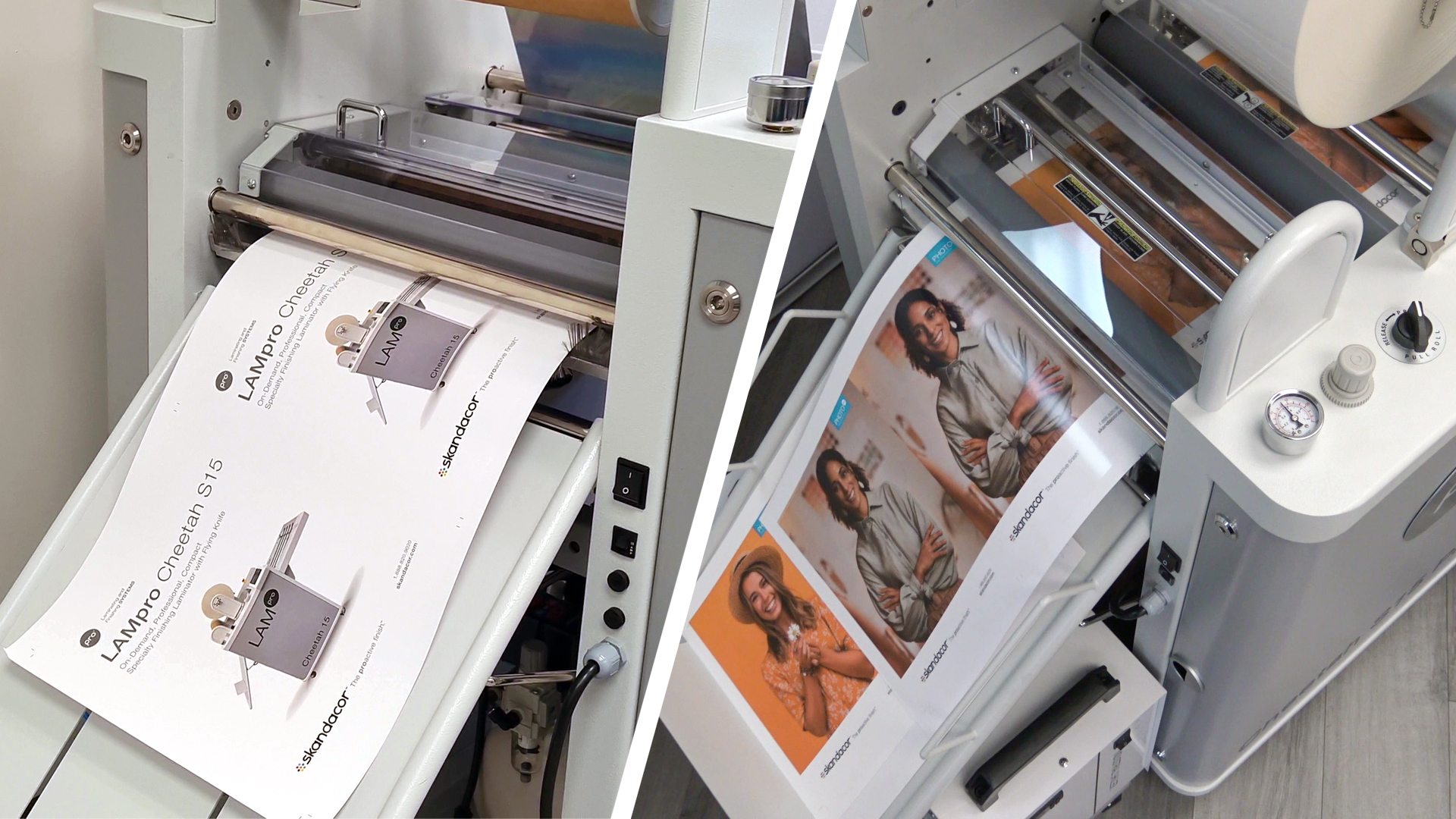
How to use a laminator machine?
The proper use of a laminator starts with understanding the material you're working with and the type of laminator your shop uses. Although operating procedures vary by machine, the general process involves a few key steps.
1. Prepare the printed sheets. Make sure the ink is sufficiently dry and the sheets are clean, flat, and free of dust or debris. Check that the printed material is compatible with your laminating film and equipment.
2. Choose the right laminating film. Select a film based on the desired finish, substrate, and application. Gloss films can enhance color vibrancy, while matte films provide a more subdued appearance. Confirm that the film is compatible with your machine.
3. Set the machine's operating parameters. Adjust the temperature, pressure, and speed according to the manufacturer's recommendations and the film specifications. These settings affect how well the film bonds to the printed surface.
4. Feed the sheets through the laminator. Load the material according to the machine's instructions, keeping the sheets properly aligned. Monitor the first few sheets to check for consistent adhesion, smooth coverage, and a clean finish.
5. Inspect the finished sheets. Look for wrinkles, bubbles, silvering, or areas where the film has not bonded properly. If you notice defects, review the settings and material compatibility before continuing production.
For commercial print shops, laminating isn't just about producing a finished sheet. It's about maintaining consistent quality across multiple jobs while managing setup time, labor, and production demands.
This is where choosing the right equipment becomes important. Depending on the machine, features such as automated feeding and cutting can reduce manual handling and help operators manage production more efficiently.
The type of machine matters, too. A desktop laminator may be sufficient for occasional, low-volume work, while a commercial system is designed to support the demands of professional print production. Features such as adjustable operating settings, feeding mechanisms, and production speed can influence how efficiently a shop handles different jobs.
Before investing, look beyond the machine's basic function. Think about the materials you process, your typical job sizes, the finishes your customers expect, and the volume you need to produce. A machine that fits your everyday workflow is often more valuable than one with capabilities your business rarely uses.
3. How Digital Embellishment Printing Also Opens New Possibilities for Print Shops
If you're considering upgrading your laminating equipment, it's also worth looking at the finishing services your customers are requesting.
While lamination may be your immediate priority, certain finishing systems can offer additional capabilities that help you expand your services without necessarily adding another separate production process.
Digital embellishment can create additional opportunities for shops looking to expand beyond conventional lamination. Techniques such as 3D digital embellishment add raised textures to selected areas of a printed piece, creating effects that can be seen and felt. Foil sleeking can introduce metallic accents to compatible printed materials, helping highlight text, logos, and graphic elements.

These capabilities can be useful for applications such as premium business cards, invitations, packaging, marketing materials, and other projects where appearance plays an important role.
The benefits of digital print embellishment may include offering more specialized products, accommodating customized orders, and creating opportunities for higher-value finishing services. Depending on the equipment and application, digital processes may also allow shops to produce certain embellished designs without the need for traditional embossing dies.
However, adding a new finishing capability requires the same careful evaluation as purchasing a laminator. Consider what your customers are asking for, whether there is a market for the service, and how the equipment would fit into your existing production process.
If lamination is your immediate priority, focus on finding a machine that meets those requirements first. Other finishing technologies can be part of a longer-term equipment plan.
4. Choosing a Commercial Laminator Machine That Fits Your Production Needs
Once you've established a business need, the next step is finding a machine that fits your production requirements.
A commercial laminator machine is a significant investment, so the decision should start with your production requirements rather than the machine's price alone.
Consider these factors before choosing a system:
- Production volume and speed: How much laminating does your shop handle in a typical day? Are you experiencing bottlenecks, or do you need equipment that can accommodate future growth? A fast laminator machine can help increase throughput, but it's equally important to consider feeding, setup, and other processes that affect overall production efficiency.
- Film compatibility and finish options: Make sure the machine supports your current laminating films and the finishes required for the applications you offer.
- Substrate requirements: Check whether the equipment can accommodate the sizes, thicknesses, and types of materials you regularly process.
- Ease of operation and workflow: Consider setup, feeding, adjustments, and maintenance to determine how well the machine fits your team's workflow.
- Cost and long-term value: Look beyond the purchase price. Factor in film consumption, maintenance, labor, production volume, and potential outsourcing costs.
If your print shop regularly handles applications requiring thicker laminating films, finding the best 10 mil laminator for your production needs involves more than comparing film thickness specifications. Choosing the right machine involves more than checking its maximum film thickness. You also need to confirm that it can handle the film and substrates you use and meet the requirements of your typical production jobs.
A 10 mil film measures approximately 0.010 inches thick. However, this refers to the film itself, not the total thickness of the laminated material. Once the film is applied to a printed sheet, the finished piece will be thicker. That's why it's important to check the manufacturer's specifications for supported film types, thickness limits, and substrate compatibility before choosing a machine.
5. How Much Is a Laminator Machine and When Should You Invest?
When considering an equipment investment, one of the first questions print shop owners ask is, how much is a laminator machine? While the purchase price is an important consideration, the overall value depends on the machine's capabilities, production capacity, and how it fits into your workflow.
Smaller systems may suit businesses with modest finishing requirements, while production-level equipment typically involves a larger investment. Additional capabilities, such as automated feeding or compatibility with specialized materials, can also affect the price.
Rather than comparing machines on purchase price alone, estimate the value the equipment could bring to your operation.
Start by reviewing how much you currently spend outsourcing lamination and other finishing work. Then consider the labor involved, the jobs you could bring in-house, and the additional services you might offer with the right equipment. These figures can help you assess whether an investment is financially practical.
Before making a purchasing decision, take a look at your production over the past year. How much did you spend outsourcing finishing work? Were there jobs you turned away because of equipment limitations? Did manual processes create delays during busy periods?
Reviewing these factors can help you identify where an equipment investment could make the greatest difference.
Why consider equipment investments before year-end?
As year-end approaches, equipment purchases may also become part of a broader tax-planning discussion.
Depending on the applicable tax rules, eligible businesses may be able to claim deductions or other tax benefits for qualifying capital equipment. However, the treatment of an equipment purchase can depend on factors such as the business's location, the type of asset, the acquisition date, and when the equipment is placed in service.
For that reason, it is worth discussing potential equipment investments with your accountant or tax advisor before making a decision. They can explain which rules apply to your business, what documentation you need, and whether purchasing equipment before the end of the tax year could offer an advantage.
Timing matters, but a potential tax benefit should not be the sole reason to invest. The equipment should also address a genuine business need and fit your financial plans.
A well-timed investment can support both your immediate production requirements and your longer-term business objectives. The key is to evaluate the operational benefits alongside the financial considerations.
Explore Finishing Solutions with Skandacor
Year-end is an opportunity to make informed decisions about your business's next stage of growth. If laminating or digital embellishment is an area you want to develop, now is a practical time to evaluate your options, understand the costs, and determine whether an investment makes sense for your shop.
Whether you're replacing an existing laminator, looking to bring more finishing work in-house, or exploring additional capabilities, Skandacor can help you evaluate your options.
Our team can help you find finishing equipment that fits your applications, production requirements, and business goals.