When a customer is working on a packaging idea, a flat file usually isn’t enough. At some point, they want to hold it, fold it, check the fit, and see if it actually works.
That’s where the traditional process starts slowing things down.
If you need a conventional die just to make a prototype, you’re spending money and losing time before the job is even approved. The customer is waiting to see something physical, and you’re waiting on tooling for a file that may still change.
And that’s usually exactly what happens.
Once the first sample is in hand, there’s almost always something to adjust. Maybe a panel needs to be resized, or the tab isn’t locking the way it should. Or perhaps the folds aren’t landing where they need to. Sometimes it looks fine on screen, but once it’s cut and assembled, it just feels off.
With traditional prototyping, that gets expensive fast. Now you’re dealing with more delay, more back-and-forth, and more cost tied to what should have been a simple revision.
A digital diecutter changes that.
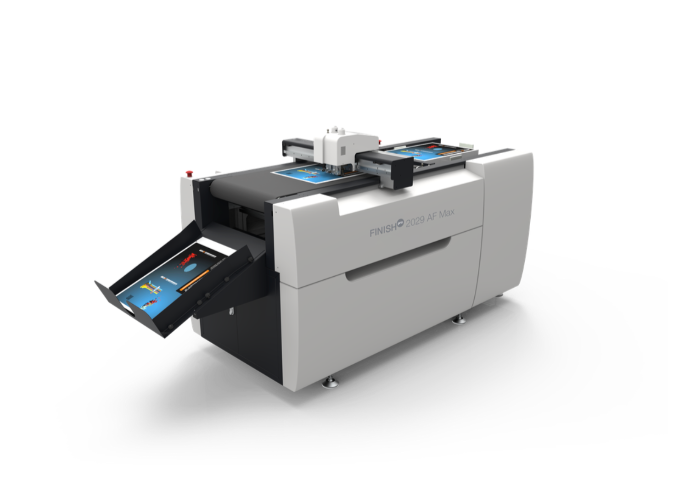
With a FINISHpro digital diecutter, you can go from file to physical prototype in about 15 minutes. That means you can show the customer something tangible almost right away, make changes quickly, and cut an updated version without restarting the whole process.
That’s a big deal. For you and for the customer.
For you, it means a faster approval cycle, less friction during revisions, and a better experience for the customer. It also means you can move faster than shops that still have to wait on a die to be produced before they can produce a sample.
For the customer, it means they can make decisions sooner and move toward market sooner. They’re not stuck waiting on tooling just to review a prototype.
And even if the final job ends up going to a larger converter, your shop can still handle prototyping in-house and help move the project forward.
That’s one of the real advantages of digital diecutting. You can respond faster, revise faster, and help your customer get where they need to go without all the usual delay.